Event 1
The Murder Case of Carolyn Polhemus

[The Murder Case of Carolyn Polhemus](entity:event-recall-event-b96f8cc44f09) begins with her death on [April 1](entity:time-recall-time-april-1-518371dfb9fe) and quickly becomes a test of how personal loyalties and political rivalry shape an investigation. Carolyn had worked for [Raymond Horgan](entity:character-recall-character-raymond-horgan-94b7cd2876a4), who had hired her before she graduated from law school. As colleagues and the press demanded answers, Horgan spoke of both the professional loss and the pressure surrounding the still-unsolved killing.
## Background and Immediate Response
Three nights after Carolyn’s death, Horgan described a strained atmosphere: his political opponent, [Nico Delia Guardia](entity:character-recall-character-nico-delia-guardia-30522ffb2b62), was suggesting that Horgan himself had committed the murder, while reporters pressed for news of the killer. Horgan’s account also recalled Carolyn’s history in his office. He had known her first as a probation officer and later as a lawyer he had hired; her death therefore touched both the investigation and his former working relationship with her.
The initial findings established that Carolyn died from a skull fracture and the resulting hemorrhage. The pathologist, [Dr. Kumagai](entity:character-recall-character-dr-kumagai-d6db85a8493e), reported that the scene might suggest strangulation but that there was air in her lungs; he could not identify the object used, describing it only as heavy and hard. Investigators searched the apartment thoroughly for a weapon but found no immediate answer in the search.
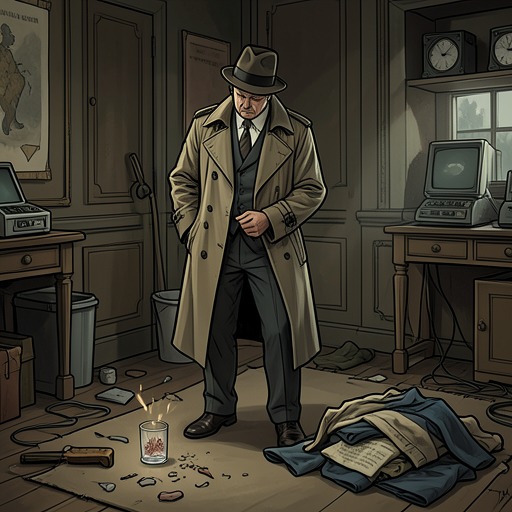
The apartment was a waterfront loft converted from a former warehouse, furnished with Chinese screens, heavy rugs, and a mixture of modern and classical touches. Carolyn had been killed in the living-room space beside the kitchen. Photographs showed a coffee-table top displaced from its brass supports and a modular seat overturned, although the room did not appear to show extensive signs of a struggle. [Rusty Sabich](entity:character-recall-character-rusty-sabich-45b128862904)’s immediate interpretation was that no one had broken in, a detail that complicated the simplest account of an unknown intruder and kept attention on the circumstances of Carolyn’s private life.
## The Photographs and Competing Interpretations
Rusty Sabich tries to approach the photographs as evidence, first urging himself to remain professionally composed. That distance does not hold. He recognizes that his response includes a troubling sense of satisfaction, which he cannot dismiss simply by condemning himself for it. The images shift [Carolyn Polhemus](entity:character-recall-character-carolyn-polhemus-749a3ce67692) in his mind: beyond the poised, capable woman he knew, he sees someone who appears to need his pity and help. The investigation thus becomes inseparable from his own compromised feelings, even as he attempts to read the scene as an investigator.
Dr. Kumagai later offers a theory rather than a confirmed account: he believes Carolyn’s killer was a lover who came to her apartment for drinks and sex, then killed her in anger and arranged the scene to suggest rape, removing her diaphragm. His interpretation makes the apparent circumstances of the killing point toward someone with private access to Carolyn, but the evidence presented does not establish that account as fact. It sharpens the central uncertainty: the scene may have been deliberately staged, and the person responsible may have been known to her.
## Political Context
The investigation unfolded against the deterioration of Raymond Horgan’s political fortunes. After thirty years of marriage, he had separated from Ann twenty months earlier, and observers around him remarked on his weight and increasingly grim expression. Although many had doubted that he would run again, he did not announce his campaign until four months before the primary. The narrator judges that Horgan’s strongest motive was his hatred of Nico Delia Guardia, his former deputy in the prosecutor’s office and now his opponent. Campaign money went to agencies and media consultants, who circulated a carefully managed portrait of Horgan on the backs of one in every four buses in the city. The forced smile, intended to suggest a toughened wit, instead seemed to the narrator to make him look foolish and out of step. This public image sharpened the contrast between the campaign’s effort to project control and Horgan’s own sense that events were slipping beyond him, as Carolyn Polhemus’s killing became bound up with the contest for political power.
## Uncertainty and Narrative Significance
The evidence does not settle who killed Carolyn or establish Dr. Kumagai’s reconstruction as fact. The search produced no identified weapon, and his later suggestion that the scene had been arranged to misdirect investigators remains a theory. That gap between observable evidence and an explanatory story is central to the case: details invite competing interpretations without confirming either an unknown intruder or someone from Carolyn’s private life. Through Rusty Sabich’s effort to examine the photographs, the investigation also exposes the difficulty of separating professional judgment from personal feeling. The case is therefore both an unresolved inquiry and a measure of how loyalties, suspicion, and private responses can shape what investigators believe they see.
Event 2
The alleged bribery at the North Branch courthouse
[The alleged bribery at the North Branch courthouse](entity:event-recall-event-6fe911923cc9) is a reported, not conclusively established, corruption case: an unsigned letter describes a $1,500 payment made to secure the dismissal of a criminal charge, while [Carolyn Polhemus](entity:character-recall-character-carolyn-polhemus-749a3ce67692)’s notes offer [Rusty Sabich](entity:character-recall-character-rusty-sabich-45b128862904) a possible route toward identifying the people involved. The account turns a seemingly routine, long-closed case into a potential scandal, yet leaves its central question—the identity of the person who took the money—unanswered.
## The letter and the alleged payment
The allegation reaches [Raymond Horgan](entity:character-recall-character-raymond-horgan-94b7cd2876a4) in a letter from an unnamed correspondent who says the events occurred nine years earlier, during Horgan’s time as prosecuting attorney. To protect the person called Noel, the writer withholds his real name: Noel, the correspondent warns, would recognize the source and might retaliate. The writer says the charge itself was not important to the account, except that Noel was deeply embarrassed by it and feared that people around him would learn what had happened.
According to the letter, Noel’s lawyer advised him to admit the offense, on the understanding that nothing serious would happen and the matter would remain unknown. Noel instead became preoccupied with the possibility of exposure and said he intended to pay someone off. The correspondent initially doubted him, then says they supplied the money: $1,500. Wanting to see where it went, the writer accompanied Noel to the [North Branch Courthouse](entity:location-recall-location-north-branch-courtho-5363f1bd9536) at Runyon and 111th.
The account describes a brief, indirect handoff. A secretary who appeared to know Noel led the pair downstairs to the prosecuting attorney’s office. Horgan’s name was on the door, but the letter does not establish that Horgan was present or identify the person who accepted the money. Noel told his companion to wait outside. He was gone for less than two minutes; afterward, he showed the writer that the sock in which he had carried the cash was empty. The correspondent says Noel later described being taken to an office, told to wait at a desk, and instructed by a man behind him to leave the money in the desk’s center drawer and go without looking back.
Ten days later, when Noel appeared in court, he feared the arrangement had failed. Instead, a lawyer from the prosecuting attorney’s office told the judge that the case was dismissed. The letter writer cannot remember that lawyer’s name and says Noel would not identify the person he had paid. Thus the correspondence supplies a specific sequence—money delivered, a concealed recipient, and a prompt dismissal—but not a direct identification of either the recipient or the official responsible for the outcome.
## The court and the cases surrounding it
The setting gives the claim institutional weight. Branch courts handled the first formal appearances of arrested people, bail decisions, misdemeanor trials, and preliminary evidentiary hearings in felony cases. The [North Branch](entity:location-recall-location-north-branch-5c27a258e1b5) was not an isolated administrative backwater: it was a working court where police, prosecutors, defense lawyers, clerks, and judges processed a continuing stream of cases. The allegation nevertheless depends on private decisions made within that ordinary flow, rather than on a publicly documented payment or an identified witness inside the office.
Rusty and [Dan Lipranzer](entity:character-recall-character-dan-lipranzer-3c94be383cf0) consider whether Noel’s charge could have belonged to the cases arising from enforcement of the state’s Morals chapter. During Raymond Horgan’s first administration, consensual adult sexual offenses had been disregarded as a matter of policy, though police still brought cases to prosecutors. As re-election approached, the office staged a concentrated cleanup, in part after complaints about activity in the [Public Forest](entity:location-recall-location-public-forest-417ac57f23e3). Dozens of men were arrested nightly, and their cases were commonly resolved through court supervision, a disposition that could later be expunged.
That campaign supplies a possible pool of cases, not proof that Noel was among those arrested. Rusty and Lipranzer estimate that about four hundred cases were brought that summer, and the letter does not give Noel’s legal name or the precise offense. The scale of the enforcement effort explains why the alias is difficult to work backward from: even if the correspondent’s account is accurate, there are many possible case files and no unambiguous name with which to begin.
## Carolyn Polhemus’s trail
Carolyn Polhemus had obtained the file about five months before her murder. Its jacket shows little investigation, and the surviving notes do not establish how far she got. She repeatedly underlined Noel, then wrote Leon. Rusty interprets the second name as a possible clue: Carolyn may have treated Noel as an alias chosen through some meaningful association and supposed she should look for a person named Leon. That remains an investigative inference, not a confirmed identification of Noel.
At the foot of the notes Carolyn also wrote Kenneally and an assignment. Rusty identifies him as [Lionel Kenneally](entity:character-recall-character-lionel-kenneally-b3c0a3074ac1), a police commander who ran the watch in the 32nd District, whose cases were heard at the North Branch. Rusty knew Kenneally through work on Night Saints cases and regards him as a good officer. The note links a named investigator to the search, but the evidence given does not say that Kenneally found Noel, confirmed the payment, or identified the recipient.
The file’s path itself troubles Rusty. He cannot see a procedural reason why he was not informed of the case, or why it went to Carolyn, who did not work in the public-corruption unit. His questions are also personal: the omission sharpens his doubts about his relationship with Raymond Horgan. The case therefore raises two connected uncertainties—what happened at the North Branch, and why the inquiry was handled as it was—without resolving either one.
## Political and institutional stakes
The letter is unsigned, and Horgan’s office receives many complaints that prove worthless. This one seems credible to Rusty, although he acknowledges a basic alternative: Noel may have deceived his friend, making the correspondent’s payment part of a scam rather than a bribe. The writer, who says they witnessed the money being delivered, believes the transaction was real; that conviction is evidence about the source’s perspective, not independent confirmation of the event.
The allegation is politically dangerous even before it is verified. In an election year, [Nico Delia Guardia](entity:character-recall-character-nico-delia-guardia-30522ffb2b62) could use evidence of concealed wrongdoing during Horgan’s administration against him. The letter’s writer also suspects the case may not have been isolated, though the document provides no separate examples. For Rusty, the possibility of a bribery ring turns the old matter into more than an individual accusation: it suggests that ordinary case processing may have hidden misconduct across a court system handling hundreds of cases.
The episode’s force lies in the gap between a vivid account and an incomplete record. The money has a stated amount and route; the court date follows ten days later; Carolyn’s notes preserve Noel, Leon, and Kenneally as investigative leads. But the alleged recipient remains unnamed, the charge remains unspecified, and the relationship between the letter and the hundreds of possible cases is unresolved. The North Branch allegation consequently remains a scandal in prospect—serious enough to unsettle Horgan’s office and reopen Carolyn’s trail, but not, on the evidence presented here, a proven account of who took the money.
Event 3
Carolyn Polhemus Homicide Case
The [Carolyn Polhemus Homicide Case](entity:event-recall-event-40f10f0c0fc4) turns, in the evidence presented here, on the difference between an accusation and proof: [Rusty Sabich](entity:character-recall-character-rusty-sabich-45b128862904) was indicted for [Carolyn Polhemus](entity:character-recall-character-carolyn-polhemus-749a3ce67692)’s murder, but the case against him consisted of physical and scientific evidence that he judged circumstantial. No witness was said to have seen the killing, and the prosecution’s account depended on how separate traces and records were interpreted together.
## Charge and Circumstances
The indictment charged Rusty with first-degree murder, alleging that on or about [April 1](entity:time-recall-time-april-1-518371dfb9fe) in [Kindle County](entity:location-recall-location-kindle-county-bdf0d318a2ad) he intentionally and maliciously killed Carolyn. The formal charge established the prosecution’s claim, not a finding of guilt. Rusty’s account emphasizes that no one would testify to having seen him kill her and that the prosecution had no confession to present. He treated the case as a chain of indirect evidence whose parts could be used to build an inference, but did not themselves amount to direct observation of the crime.
## Evidence Cited Against Rusty
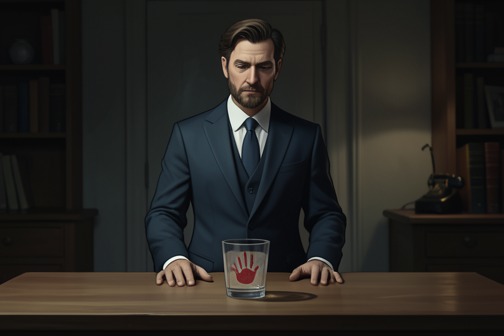
The physical evidence included a drinking glass bearing two of Rusty’s fingerprints. Those prints were compared with known fingerprints he had supplied twelve years earlier, when he became a deputy prosecutor. The glass therefore linked him to an object associated with Carolyn, while the age and origin of the comparison prints formed part of the evidentiary background.
Telephone records showed a call from Rusty’s home to Carolyn’s apartment about an hour and a half before her murder. A forensic sample taken from Carolyn’s body was reported to contain spermatozoa of Rusty’s blood type; the sample also contained a contraceptive compound, which the prosecution treated as evidence of consensual sex. The account presents these findings as elements of the case, not as independent proof of who killed Carolyn.
Fibers provided another link. Malt-colored Zorak V fibers found on Carolyn’s clothing, on her body, and scattered through the living area were reported to match samples from the carpet in Rusty’s home. Alongside the fingerprints, call records, and forensic findings, this comparison gave the prosecution several points of contact between Rusty and Carolyn’s apartment. Rusty’s own assessment, however, remained that the case was circumstantial: the evidence invited an inference about his presence and relationship to Carolyn but did not place an eyewitness to the killing before the jury.
## Significance of the Case Against Him
The evidence acquires its force through accumulation. A call shortly before the murder, fingerprints on a glass, biological findings, and matching carpet fibers each address a different connection; together, they formed the prosecution’s account of Rusty’s involvement. Yet the gap between association and proof remained central to his description of the case. The indictment named him as the accused, while the absence of an eyewitness or confession left the meaning of the physical evidence open to dispute.
Event 4
Kindle County Prosecuting Attorney Election
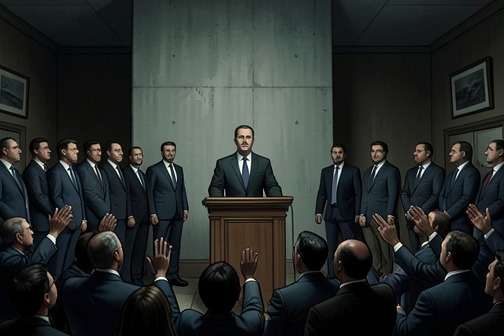
The [Kindle County](entity:location-recall-location-kindle-county-bdf0d318a2ad) Prosecuting Attorney election marks the end of [Raymond Horgan](entity:character-recall-character-raymond-horgan-94b7cd2876a4)’s hold on the office and the beginning of [Nico Delia Guardia](entity:character-recall-character-nico-delia-guardia-30522ffb2b62)’s administration. For [Rusty Sabich](entity:character-recall-character-rusty-sabich-45b128862904), the contest is not only a political defeat but an abrupt rearrangement of the workplace and career he has known: the election’s projected result soon becomes an early handover.
## A campaign sustained by hope
On the night before [Election Day](entity:time-recall-time-election-day-4bfca208366c), Raymond met in his office with aides and supporters, still looking for grounds to believe he could win. The latest poll, commissioned by the newspaper and Channel 3 on the day [Bolcarro](entity:character-recall-character-bolcarro-750a2086f02d) endorsed him, put Raymond five points behind. One campaign supporter thought the situation had improved since then, arguing that Raymond had regained momentum as an underdog. The men held to that possibility even as Rusty recognized how much their optimism depended on imagining a reversal.
The election also exposed the uneasy relationship between the prosecutor’s office and the local party organization. During Raymond’s twelve years in office, he had discouraged staff from active campaigning and had never solicited campaign donations or help from them. But administrative employees hired before his election retained obligations to party sponsors who had helped secure their jobs. A decade earlier, Raymond had agreed with Bolcarro to give most of the staff Election Day off, allowing party workers to canvass, distribute leaflets, drive elderly voters, and watch polling places. This year, those activities served Nico’s campaign.
## Election Day at the office
The weather was bright, but the office felt unsettled. Rusty stayed at work, describing himself as the first mate aboard a sinking ship, while some lawyers handled briefs and trials or cleared their desks. About two dozen younger deputies worked with the U.S. Attorney’s office on a vote-fraud patrol. Their assignments mostly concerned minor complaints: malfunctioning voting machines, a reported gun at a polling place, an election judge wearing a campaign button, or excessive assistance to elderly voters. Rusty received updates and told reporters there was no indication that the democratic process was being tampered with.
At about 4:30 p.m., [Dan Lipranzer](entity:character-recall-character-dan-lipranzer-3c94be383cf0) called with the first decisive news. A contact at Channel 3 had seen exit polls projecting Nico ahead by eight to ten points if the pattern held. The polls would remain open for another hour and a half, and the early television coverage had emphasized heavy turnout; nevertheless, the projected margin made Rusty believe the loss was real. Looking from his office toward the courthouse columns, the downtown rooftops, and the river, he found a familiar view suddenly strange.
## The result reshapes the office
After the election, the consequences became immediate. Rusty saw Nico sitting in Raymond’s chair, composed in a manner Rusty recognized as affected, while [Tommy Molto](entity:character-recall-character-tommy-molto-196f33857fc7) sat beside him. Raymond explained that the meeting now belonged to Nico and that he had offered him the chair. [Mac](entity:character-recall-character-mac-416206506779) had moved her chair to the window and kept apart from the scene. Rusty understood that Nico would take over, Mac would join his staff until she took the bench, Tommy would have Rusty’s job, and Rusty himself might struggle to meet the mortgage.
Raymond said he had spoken the previous night with the mayor and did not wish to remain in office in light of the voters’ preference. The mayor had suggested that Raymond discuss an early start with Nico; Nico agreed. With the County Board’s concurrence, Raymond would leave on Friday. The speed of the departure surprised Rusty, and Raymond’s strained manner suggested how difficult the decision was for him. The election thus did more than settle who had prevailed: it accelerated the transfer of power and made the campaign’s personal and professional losses visible inside the office itself.
## Significance
The contest is presented through a sharp shift in expectation: a campaign meeting still entertaining the possibility of recovery gives way to an exit-poll projection, then to Nico occupying Raymond’s chair. The transition is not delayed until a distant formal endpoint. Raymond’s decision to leave early turns the voters’ preference into an immediate institutional change, while Rusty’s reaction registers the private cost of that change within the prosecutor’s office.
Event 5
Grand Jury Indictment of Rusty Sabich for the Polhemus Murder
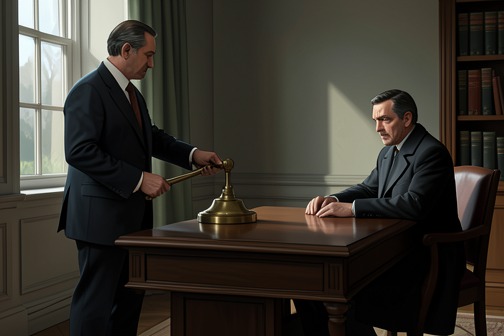
The [Grand Jury Indictment of Rusty Sabich for the Polhemus Murder](entity:event-recall-event-4470f632d021) is the formal accusation that [Rusty Sabich](entity:character-recall-character-rusty-sabich-45b128862904) murdered [Carolyn Polhemus](entity:character-recall-character-carolyn-polhemus-749a3ce67692) on [April 1](entity:time-recall-time-april-1-518371dfb9fe). The true bill, issued by the [Kindle County](entity:location-recall-location-kindle-county-bdf0d318a2ad) grand jury on June 23, transforms months of public rumor into a criminal case with specified charges, evidence, and an impending arraignment. In Rusty’s account, the document is both a legal instrument and the point at which the possibility of prosecution becomes personally undeniable.
## The charge and the true bill
The indictment identifies Rusty as the defendant and alleges that, in Kindle County, he knowingly and intentionally killed Carolyn with malice aforethought. It cites Section 76610 of the Revised State Statutes and classifies the alleged offense as first-degree murder. These are the grand jury’s charges, not a finding at trial: the document establishes what the prosecution accuses Rusty of doing, rather than proving his guilt.
The grand jury’s June session returns a true bill, with Joseph Doherty named as foreperson. The document is dated June 23 and bears the name of [Nico Delia Guardia](entity:character-recall-character-nico-delia-guardia-30522ffb2b62) as Kindle County Prosecuting Attorney. Its formal language fixes the case around a date, a jurisdiction, a statutory violation, and a named defendant. The terse certification marks an institutional decision to proceed, even as the truth of the allegation remains contested.
## From rumor to arraignment
On July 14, three weeks after the indictment, Rusty waits for his arraignment before Chief Superior Court Judge [Edgar Mumphrey](entity:character-recall-character-edgar-mumphrey-926b068539d2). The prosecution has provided a courtesy copy of the indictment to [Sandy Stern](entity:character-recall-character-sandy-stern-40ea4b75c8ab) the previous day. Rusty first reads the charges in Stern’s office, roughly forty feet down the hall from the room where he later waits with the discovery materials. That small distance separates the first shock of the accusation from the routine legal steps now gathering around it.
The discovery rules require the prosecution, before arraignment, to make available the physical evidence it intends to introduce and a list of witnesses with copies of their statements. Rusty studies the resulting box, which also contains another copy of the indictment. Its label identifies the case, while the papers inside connect the formal charge to the evidence and testimony the prosecution plans to use. The indictment is therefore not an isolated notice: it arrives as the organizing document for the next stage of the case.
For two months, press leaks, rumor, innuendo, and gossip have circulated around Rusty. He had said that a formal indictment would bring relief, but its arrival proves otherwise. When he first sees the charges, panic overwhelms his attempt to appear composed; by July 14, the same document remains a focus of dread. In the dark-wainscoted room, among rows of crimson-jacketed law books, he waits for that familiar feeling to pass. The proceeding is still ahead, but the accusation has already altered the way he experiences the present.
## The indictment’s language and Rusty’s response
One phrase in the charge draws Rusty’s attention whenever he rereads it: the archaic common-law formulation trespass vi et armis. He understands it as language inherited from centuries of English-speaking legal practice, largely abandoned elsewhere but retained in the state statute. Its survival gives the indictment, for him, a strange historical weight. A contemporary prosecution speaks through an old legal formula, making the charge seem at once specific to his case and continuous with a long tradition of criminal accusation.
That wording also prompts Rusty to place himself among a broad company of criminals: famous figures such as John Dillinger, Bluebeard, and Jack the Ripper, as well as the many lesser-known people whose acts grew from abuse, instability, evil, or a moment of temptation. His reflection does not settle whether the charge against him is true. Instead, it shows how the indictment presses him to imagine himself within the larger category of those accused of violence, and how the language of the law gives that fear an almost historical scale.
## Narrative significance
The indictment changes the status of the case without resolving its central question. Before it, leaks and gossip have made Rusty a subject of public suspicion; after it, he must answer a specific first-degree murder charge at arraignment and confront the prosecution’s planned evidence. The document’s official certainty contrasts with his shocked resistance to the fact that the case is happening at all.
Rusty’s retrospective account places the legal act beside its private consequences: the courtesy copy in Stern’s office, the discovery box, the repeated return to the charge’s wording, and the failed expectation that indictment would bring relief. The grand jury’s decision thus serves as a threshold in the story. It makes prosecution concrete while leaving guilt, evidence, and the eventual outcome to be tested in court.
Event 6
Discovery of the Leon Wells Court File
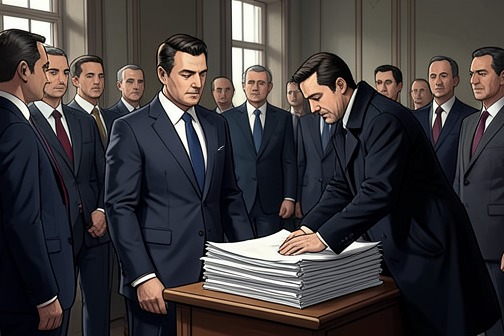
The [Discovery of the Leon Wells Court File](entity:event-recall-event-dd21c0c047d7) is an investigative turning point: a set of photocopied court papers connects [Carolyn Polhemus](entity:character-recall-character-carolyn-polhemus-749a3ce67692) to an old public-indecency complaint and shows [Tommy Molto](entity:character-recall-character-tommy-molto-196f33857fc7) handling its dismissal. The documents do not settle the larger questions surrounding the case, but they transform a missing record into a concrete lead at a moment when the prosecutor’s office is already under scrutiny.
## Background and Pressures
The discovery comes amid upheaval in the [Kindle County Prosecuting Attorney’s Office](entity:location-recall-location-kindle-county-prosec-74526637bf95). With [Raymond Horgan](entity:character-recall-character-raymond-horgan-94b7cd2876a4) occupied by campaign appearances, [Rusty Sabich](entity:character-recall-character-rusty-sabich-45b128862904) is carrying much of the office’s routine prosecutorial work while also confronting the unresolved murder of Carolyn Polhemus. A separate crisis between local police and federal agents has consumed attention, underscoring how much institutional business competes with the murder investigation.
The press is also watching the office for signs of disorder. Stew Dubinsky of the Trib asks about a high-level departure from the Homicide Section. After [Nico Delia Guardia](entity:character-recall-character-nico-delia-guardia-30522ffb2b62)’s departure, Molto has become acting head of the section, but Horgan has refused to make the appointment permanent. Rusty recognizes that Molto is the subject of the report and fears that a deputy’s death followed by the investigator’s departure will make the office appear close to chaos. That atmosphere makes the papers Lipranzer brings more than an archival curiosity: they arrive as the office’s internal stability and the credibility of its investigation are both in question.
## Lipranzer’s Discovery
During Horgan’s election-night appearance at a hotel ballroom, Lipranzer pulls Rusty away from the crowd and into an alley. He looks deeply worried and tells Rusty that something is badly wrong at the Hall. Lipranzer explains that he has been in [North Branch](entity:location-recall-location-north-branch-5c27a258e1b5) before five o’clock and that the developments he is describing began around six or six-thirty. He produces four or five photocopied sheets of court documents.
The first is a case jacket for People v. [Leon Wells](entity:character-recall-character-leon-wells-57eb25746272), a public-indecency complaint dismissed by court order on a day in July nine years earlier. Its case number matches the complaint number missing from the records at the [32nd District police station](entity:location-recall-location-32nd-district-police-55f6f2b43361). The match gives the papers immediate investigative weight: they identify a specific old case corresponding to an absence in the police records, rather than merely offering an unrelated name or document.
## What the Papers Establish
The bond order identifies Carolyn as Wells’s assigned probation officer. In the minor-case procedure described in the record, a defendant could satisfy bail by signing a promissory note for an amount below $5,000, provided he refrained from further crimes and reported by telephone once a week to a member of the court’s probation department. Carolyn’s name and telephone number appear on Wells’s bond slip. The document establishes an official connection between her and the defendant, while leaving open what that connection meant beyond her assigned role.
The final sheet is a court half-sheet captioned as a motion to dismiss without prejudice. It identifies the prosecutor as Raymond Horgan, on behalf of the Kindle County Prosecuting Attorney’s Office, and leaves a blank for the deputy responsible for the case to sign. Rusty initially struggles to read the signature, then recognizes Molto’s name. The papers therefore place Molto on the dismissal paperwork and Carolyn in the case’s probation record; they do not, on their own, explain why the complaint was dismissed or establish misconduct by either person.
## Implications and Aftermath
Rusty and Lipranzer study the documents together under a street lamp and say little. Inside, the crowd roars and the band resumes playing. The contrast between the public celebration of Horgan’s electoral defeat and the quiet discovery in the alley gives the moment its force: the political handover is happening in plain sight, while a potentially consequential piece of the office’s past surfaces just outside the room.
The file’s significance lies partly in the questions it makes possible, not in answers it supplies. It documents a chain of official associations linking Wells’s complaint to Carolyn and Molto, but does not itself prove a bargain, motive, or reason for dismissal. Later, at Rusty’s trial, the prosecution publicly describes his intimate relationship with Carolyn and alleges that he was jealous because she was also involved with Horgan. That courtroom account gives the broader case a highly charged personal frame, but it is distinct from what the Leon Wells papers actually establish. The contrast is important: the file offers a narrow documentary record, while the trial turns relationships into a public theory of motive.
The discovery also sits against the trial’s wider uncertainty about physical evidence. The prosecution presents fingerprints from a glass, telephone records, biological evidence, and carpet fibers as parts of its case; the defense challenges the reliability and interpretation of that evidence. The file does not resolve those disputes, but it adds another institutional thread to a case already shaped by missing records, competing accounts, and the conduct of people within the prosecutor’s office. When Judge [Larren Lyttle](entity:character-recall-character-larren-lyttle-d884c770eae6) later dismisses the murder charges, newspaper coverage emphasizes his criticism of the prosecution and his view that some evidence may have been manufactured. The Leon Wells file remains a discrete clue within that larger collapse of confidence, rather than a self-contained explanation for it.
Event 7
Carolyn Polhemus Murder in Her Apartment
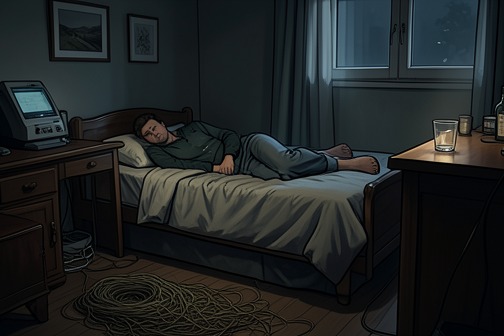
[Carolyn Polhemus Murder in Her Apartment](entity:event-recall-event-47f44ccd9ec7) is the crime at the center of the investigation and trial. Carolyn was discovered in her apartment after failing to attend a morning meeting and a court call; the scene’s condition prompted an officer to suspect that the killing occurred during or as a result of a sexual assault. Evidence collected there, including a glass later associated with [Rusty Sabich](entity:character-recall-character-rusty-sabich-45b128862904)’s fingerprints, became part of the case against him.
## Discovery and Initial Response
Carolyn was found at about 9:30 a.m. after missing an eight o’clock meeting and a nine o’clock court call. Her secretary contacted the building superintendent, who pushed the apartment door open, looked inside, and recognized that police were needed. Patrol officers summoned [Harold Greer](entity:character-recall-character-harold-greer-b1ffb4a492ae), the third officer at the scene.
Greer described both what he saw and the evidence technicians’ work under his direction. They collected fibers from Carolyn’s body and additional fibers from her skirt. He also described a glass found on the bar and watched as the technicians sealed it in a plastic packet. Its later significance would make the handling and whereabouts of the glass a point of dispute.
## The Scene and the Investigative Theory
Greer’s first impression rested on several features together: the position of Carolyn’s body, the way it had been tied, signs of disturbance, and an open window above the fire escape. Based on those circumstances, he initially believed that Carolyn had been murdered in the course of, or as a result of, a sexual assault. His testimony presented this as an assessment made on first viewing the scene, not as a final determination of the crime’s circumstances.
The apartment retained visible signs of the disturbance when Rusty later returned with the investigation. The table and mauve seating piece were still overturned, and an outline of Carolyn’s body had been marked on the floor near the kitchen. A small inlaid box Rusty had bought for her remained beside the sofa, a personal object amid the preserved traces of the crime. Its presence linked the evidence scene to their private history without resolving what had happened in the apartment.
## Evidence and Aftermath
During that later visit, Rusty wore loose plastic gloves at [Sandy Stern](entity:character-recall-character-sandy-stern-40ea4b75c8ab)’s insistence, avoiding a potential dispute over fingerprints [Tommy Molto](entity:character-recall-character-tommy-molto-196f33857fc7) said had already been found. Rusty counted twelve tumblers on a towel beside the bar, checking the number twice. His fingerprints had been identified on one of the glasses in that set. The count and the glass’s evidentiary history made the barware more than background detail: it connected the apartment investigation to contested questions about how evidence was collected and preserved.
The murder’s immediate discovery and the later scrutiny of the apartment thus occupy distinct stages of the case. Greer’s observations supplied an early theory about the circumstances of the killing, while the preserved scene and its objects became evidence revisited under the pressure of a prosecution. The testimony establishes what responders encountered and what they inferred at first; it does not, by itself, settle the killer’s identity or the full truth of the crime.
Event 8
Rusty Sabich and Carolyn Polhemus's Romance
[Rusty Sabich](entity:character-recall-character-rusty-sabich-45b128862904) and [Carolyn Polhemus](entity:character-recall-character-carolyn-polhemus-749a3ce67692)’s Romance is a concealed affair whose meaning shifts between private memory and public courtroom strategy. The prosecution presents their intimacy as evidence of jealousy and motive, while Rusty recognizes that this account does not capture what happened; at the same time, the defense’s challenge to the evidence sits uneasily beside his knowledge that the relationship was real.
## The Relationship in the Prosecution’s Account
During opening statements, [Nico Delia Guardia](entity:character-recall-character-nico-delia-guardia-30522ffb2b62) tells the jury that Rusty and Carolyn had a personal relationship for at least seven or eight months before the murder. He points to Rusty’s visits to Carolyn’s apartment and the calls they exchanged, then characterizes the relationship as intimate. He also claims that Rusty was unhappy and intensely jealous. Those claims frame the affair as a possible motive, but they remain the prosecution’s account, not facts established by the evidence presented in this moment.
Rusty sees a decisive gap in Nico’s presentation: the prosecutor has not correctly guessed what occurred between him and Carolyn. The discrepancy separates the existence of the affair from the prosecution’s explanation of it. The jury hears a confident theory of jealousy, while Rusty knows the private history is more complicated than that theory suggests.
## Private Memory and Continuing Longing
After a day in court, Rusty returns to his home in [Nearing](entity:location-recall-location-nearing-ce6695f065fb) shortly before one in the morning. In the quiet, with [Barbara](entity:character-recall-character-barbara-d5f53d2adcbd) asleep elsewhere in the house, he reflects on the day and finds himself remembering Carolyn. The recollection brings back the intensity of their relationship and his sense that, for a time, he had found an extraordinary happiness with her. Rather than treating the affair as a closed chapter, he longs to experience it again, even as he recognizes the hopelessness and shame bound up with that wish.
The memory recedes, but it does not resolve into a clear judgment about what the relationship meant. Rusty remains awake, unable to work through the visitation, and sits with his briefcase in his lap. The scene places his private attachment beside the routine demands of legal work: the affair persists as an emotional fact even while the trial turns it into a disputed piece of evidence.
## The Affair as a Courtroom Dilemma
The defense contests whether the prosecution has established any personal relationship between Rusty and Carolyn. When [Tommy Molto](entity:character-recall-character-tommy-molto-196f33857fc7) asks a witness whether Rusty disclosed such a relationship, [Sandy Stern](entity:character-recall-character-sandy-stern-40ea4b75c8ab) objects that there is no proof of record for it. Judge [Larren Lyttle](entity:character-recall-character-larren-lyttle-d884c770eae6) allows the question to stand but instructs the jury that Molto’s question does not establish its assumption; the jurors must decide from the evidence whether the relationship existed.
Rusty understands the strategic purpose of the objection: it interrupts the prosecution and reminds the jury of the weakness in its proof. But the tactic creates a painful dilemma. If Rusty testifies, he may have to confirm the romance after Stern has spent two weeks challenging the prosecution’s evidence for it. The affair therefore divides public proof from private knowledge, placing Rusty’s loyalty to the defense strategy in tension with the truth he could tell under oath.
Event 9
Raymond Horgan and Carolyn Polhemus's Brief Affair

[Raymond Horgan](entity:character-recall-character-raymond-horgan-94b7cd2876a4) and [Carolyn Polhemus](entity:character-recall-character-carolyn-polhemus-749a3ce67692)’s Brief Affair was a short-lived personal relationship that became consequential when Horgan testified about Carolyn’s work in the prosecutor’s office. The courtroom examination connected their intimacy to the handling of a sensitive case and exposed the difficulty of separating private conduct from professional responsibility.
## Relationship and Disclosure
Horgan’s account placed the relationship within a longer professional association. He said he had first met Carolyn when she was a probation officer; she later worked for eight years as a deputy prosecuting attorney in his office. Their personal relationship lasted only briefly, near the end of the previous year. When [Tommy Molto](entity:character-recall-character-tommy-molto-196f33857fc7) asked about Carolyn, Horgan became somber and lowered his eyes to the witness-box rail before acknowledging that he had known her personally as well as professionally.
The affair emerged in open court not as an isolated piece of private history but as part of the examination of Horgan’s supervision of the office. Its brevity did not make it irrelevant: Carolyn was a member of his staff, and the questions focused on whether their relationship had affected her professional assignments.
## The Assignment Dispute
[Sandy Stern](entity:character-recall-character-sandy-stern-40ea4b75c8ab) pressed Horgan on a specific allegation: that he had assigned Carolyn a highly sensitive matter she was eager to handle while the two were personally involved. Stern framed the assignment as a case known only to Horgan and Carolyn, making the overlap between intimacy and official discretion central to the challenge. Horgan said he did not recall exactly when he made the assignment, so the testimony raised the question without establishing its timing conclusively.
The exchange also brought the election campaign into view. Stern asked whether Horgan had worried that someone connected to [Nico Delia Guardia](entity:character-recall-character-nico-delia-guardia-30522ffb2b62) might disclose that he had given choice assignments to a staff member with whom he was having an affair. Horgan allowed that the possibility may have crossed his mind and conceded that the situation was not ideal. When Stern characterized the matter as an effort to hide the affair, Horgan replied that it was not something he ordinarily discussed and accepted that it could be viewed as unprofessional.
## Professional and Narrative Significance
The affair matters chiefly through the questions it raises about workplace authority: Horgan held responsibility for assignments, while Carolyn worked in the office he led. The testimony does not settle whether the relationship determined the timing or substance of the assignment. Instead, Horgan’s uncertainty about when he made it leaves the potential conflict of interest exposed but unresolved.
The episode also shows how political scrutiny entered the courtroom. Although Molto did not directly ask about the election, it surfaced through the examination of Horgan’s decisions and his possible concern about disclosure. The relationship therefore became evidence in a broader inquiry into judgment, supervision, and the vulnerability of official conduct to political attack.
Event 10
Raymond Horgan's Election Loss and Prosecutor's Office Handover

[Raymond Horgan](entity:character-recall-character-raymond-horgan-94b7cd2876a4)’s election loss and the ensuing transfer of the [Kindle County](entity:location-recall-location-kindle-county-bdf0d318a2ad) prosecutor’s office unfold less as a single handover than as an erosion of authority visible across the office, the campaign, and the courtroom. While Horgan was away campaigning, [Rusty Sabich](entity:character-recall-character-rusty-sabich-45b128862904) was already making consequential decisions; afterward, Horgan’s defeat and the rise of his former deputy [Nico Delia Guardia](entity:character-recall-character-nico-delia-guardia-30522ffb2b62) gave the murder prosecution a political history that could not be kept outside the case.
## Campaign and Divided Authority
Horgan spent much of the day making campaign appearances, and he personally answered many press calls. He wanted the favorable attention of newspaper coverage and did not want reporters to interpret his reliance on others as evidence that he was losing his grip on the office. In his absence, Rusty handled much of the work ordinarily facing the prosecuting attorney: deciding how cases should be prosecuted, considering immunities and plea bargains, and dealing with investigative agencies. The campaign was therefore not merely happening alongside the office’s work. It was already redistributing authority within it.
The strain was apparent in the office’s handling of [Carolyn Polhemus](entity:character-recall-character-carolyn-polhemus-749a3ce67692)’s murder. Rusty was expected to find someone to prosecute while also managing the routine demands of the prosecutor’s office. Meanwhile, reporters were testing whether the office was losing another senior figure. Stew Dubinsky asked about a possible high-level defection from the Homicide Section. [Tommy Molto](entity:character-recall-character-tommy-molto-196f33857fc7), who had become acting head of the section after Nico left, had not been given the position permanently by Horgan. The office’s uncertainty over who would lead the investigation fed a larger impression of instability just as the election was turning against Horgan.
## Defeat and Political Exposure
The election’s approaching loss became explicit in a conversation Horgan later recounted from his office: it was the night he and Rusty first realized that Horgan was going to lose. During the murder trial, that moment returned as part of a cross-examination examining how political pressure and the murder investigation intersected. Horgan was asked about the campaign, his opponent, and whether he feared that someone friendly to Delia Guardia might reveal that he had given desirable assignments to an assistant with whom he was involved. The testimony placed the office’s internal loyalties and Horgan’s personal conduct within the same political frame, without making the question itself proof of the alleged motive.
Delia Guardia’s victory also carried the weight of an internal challenge. He had previously served as Horgan’s deputy and, as the questioning emphasized, had many friends in the office. The change in leadership thus arose from a contest between political opponents who shared an institutional history, not from a clean break between outsiders. The prosecutor’s office became both the object of the contest and one of its instruments: its personnel, assignments, and public credibility were all open to interpretation as campaign evidence.
## The Affair Enters Public Life
The campaign’s private and professional tensions became especially visible when Delia Guardia addressed the jury in Rusty’s trial. He disclosed that Rusty and Carolyn had had an intimate relationship, then characterized Rusty as jealous because Carolyn had also formed a relationship with Horgan. The alleged connection between Horgan and Carolyn had not previously become public in that way. Delia Guardia turned toward the press as he revealed it, and the courtroom reacted; Judge [Larren Lyttle](entity:character-recall-character-larren-lyttle-d884c770eae6) rebuked him for moving beyond a neutral outline of the evidence into argument.
The disclosure exposed a contradiction at the heart of the transition. Delia Guardia was now leading the prosecution against a former colleague, yet his account also brought Horgan’s relationship with Carolyn into the case. Rusty’s narration indicates that Delia Guardia had not correctly understood what had happened between Rusty and Carolyn, even as he used the information he did possess to present jealousy as a motive. The campaign’s changing alliances therefore shaped not only who controlled the office but also how the case was publicly framed.
## Aftermath and Meaning
By the time the trial ended, the office under Delia Guardia was itself the subject of damaging public attention. The newspapers reported that Judge Lyttle had dismissed the murder charges against Rusty after an eight-day trial, sharply criticized the prosecution, and said that some evidence appeared to have been manufactured. Their headlines cast the result as a disgrace for the prosecution. This later episode does not erase Horgan’s electoral defeat, but it shows the burden inherited by the incoming administration: control of the office brought responsibility for a case whose failures became highly visible.
The transfer is consequently defined by more than one change of officeholder. Horgan’s campaigning left Rusty carrying substantial day-to-day authority; Delia Guardia’s challenge drew on relationships formed inside the same institution; and the trial converted the history of the office into public evidence about motive, favoritism, and credibility. Political succession promised a new command, but it did not settle what the office’s actions meant or restore confidence in its use of prosecutorial power.
Event 11
Rusty Sabich Charged with Murder and Indicted
[Rusty Sabich Charged with Murder and Indicted](entity:event-recall-event-058228c0263c) marks the transition from prosecution to trial: after his indictment for [Carolyn Polhemus](entity:character-recall-character-carolyn-polhemus-749a3ce67692)’s murder, his case was called in court on [August 18](entity:time-recall-time-august-18-9249a96bb154), a few days short of two months later. The opening places Rusty not behind the prosecution’s desk but standing as the accused, while the legal teams assemble around the case.
## Indictment and Timing
By the time the court called the case, Rusty had been indicted for nearly two months. The interval establishes that the August 18 proceeding was not the immediate aftermath of the indictment but the next formal stage in a case that had advanced toward trial. The evidence gives no further particulars about the indictment itself in this scene; its significance here lies in the approaching contest before the court.
## The Case Comes to Court
On August 18, the lawyers and Rusty moved to the podium as Judge [Larren Lyttle](entity:character-recall-character-larren-lyttle-d884c770eae6) presided. Rusty stood behind his counsel, [Sandy Stern](entity:character-recall-character-sandy-stern-40ea4b75c8ab) and [Jamie Kemp](entity:character-recall-character-jamie-kemp-f80ca6ce7734). Across from them were [Tommy Molto](entity:character-recall-character-tommy-molto-196f33857fc7) and [Nico Delia Guardia](entity:character-recall-character-nico-delia-guardia-30522ffb2b62) for the prosecution, with [Tom Glendenning](entity:character-recall-character-tom-glendenning-4af1824ef639) present as the case investigator. The assembled teams made the proceeding’s opposing sides visible: the former prosecutor now faced a murder case as its defendant.
## The Trial’s Opening Position
The scene presents the case through Rusty’s first-person narration, placing the reader beside the defendant as the trial begins. His position behind the lawyers is both literal and procedural: counsel would address the court, while he remained the person whose fate the proceedings concerned. The indictment’s consequence is thus rendered as a change in role, from a legal official to the accused at the center of a public trial.
Event 12
The Murder Trial of Rusty Sabich
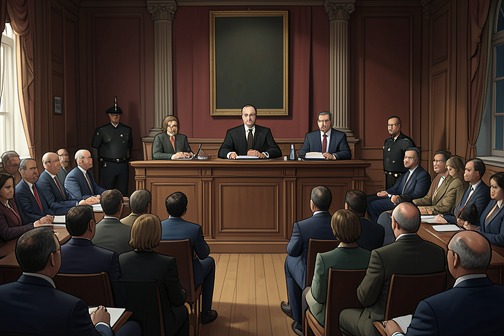
[The Murder Trial of Rusty Sabich](entity:event-recall-event-b7ed284ecf70) begins amid intense public attention and ends before the jury can deliberate: Judge [Larren Lyttle](entity:character-recall-character-larren-lyttle-d884c770eae6) dismisses the case, concluding that the evidence cannot fairly support a verdict. Through [Rusty Sabich](entity:character-recall-character-rusty-sabich-45b128862904)’s account, the trial becomes both a contest over circumstantial evidence and a test of whether the court can protect the accused from a prosecution built on unresolved gaps.
## Opening and Jury Selection
The case is called for trial on [August 18](entity:time-recall-time-august-18-9249a96bb154), a few days short of two months after Rusty’s indictment. Judge Lyttle presides, with [Sandy Stern](entity:character-recall-character-sandy-stern-40ea4b75c8ab) and [Jamie Kemp](entity:character-recall-character-jamie-kemp-f80ca6ce7734) for the defense and [Nico Delia Guardia](entity:character-recall-character-nico-delia-guardia-30522ffb2b62) and [Tommy Molto](entity:character-recall-character-tommy-molto-196f33857fc7) for the prosecution. [Tom Glendenning](entity:character-recall-character-tom-glendenning-4af1824ef639) appears as the prosecution’s case investigator. The courtroom is crowded with spectators and press, while the judge’s staff and armed bailiffs attend the unusually prominent proceeding.
Seventy-five prospective jurors are brought in, and sixteen are initially seated in the jury box. Judge Lyttle explains the case and the presumption of innocence before questioning begins. The final panel consists of twelve jurors and four alternates. The regular jurors include nine white people and three Black people, seven women and five men; the alternates are to hear the evidence but join deliberations only if a regular juror is excused. With the jury chosen, the trial is ready to begin early on the second afternoon.
## Competing Accounts of the Evidence
In opening, the prosecution presents a case that depends on circumstantial evidence, including fingerprint evidence associated with a glass from [Carolyn Polhemus’s apartment](entity:location-recall-location-carolyn-polhemus-s-a-54b482d8bd36). Stern’s response is to direct the jury’s attention to what the prosecution cannot supply: the glass itself, a complete account of the evidence, and proof that rises beyond reasonable doubt. He also sets Rusty’s record of public service against the charge, presenting him as a senior prosecutor whose career involved pursuing criminal conduct rather than committing it.
The dispute over the glass becomes a concrete test of those competing claims. The physical exhibit cannot be produced, and the defense objects to testimony about the fingerprints without an opportunity to examine it. The prosecutors maintain that the chain of custody is uncontested and that testimony from [Harold Greer](entity:character-recall-character-harold-greer-b1ffb4a492ae), [Dan Lipranzer](entity:character-recall-character-dan-lipranzer-3c94be383cf0), and the laboratory supervisor can establish that the prints came from lifts taken from the glass the day after the murder. Judge Lyttle admits the testimony, but says the missing exhibit and the defense’s inability to inspect it are legitimate grounds for skepticism. He notes longstanding careless handling and record keeping in the police evidence room, leaves open the possibility of bad faith, and says he will watch for further evidence of it. He also plans a strongly worded instruction to limit how the jury may use the testimony.
## Judgment and Dismissal
After reflecting on the case for twenty-four hours, Judge Lyttle considers whether the evidence should be allowed to proceed to jury deliberations. He concludes that it should not. In his assessment, the prosecution has not established motive, concrete evidence of an intimate relationship, or effective proof that Rusty had sexual relations with Carolyn on the night she died. He acknowledges that the state might be entitled to infer Rusty was there, but finds no direct proof that he committed the murder. The missing glass remains part of the uncertainty surrounding the prosecution’s case.
The judge allows the defense motion for judgment of acquittal, discharges Rusty, and dismisses the case. Rusty understands that he is free as the people around him embrace him and the judge explains his decision to the jury. There is no jury verdict: Lyttle ends the prosecution before deliberations, judging that the evidence is inadequate and that Rusty should not remain under the burden of trial. He apologizes for what has taken place and calls it a disgrace to the cause of justice.
## Significance
The trial’s ending separates suspicion from proof without resolving every question surrounding Carolyn’s death. The court’s decision turns not on a finding of what happened, but on the insufficiency of the state’s evidence to justify asking the jury for a verdict. The absent glass crystallizes that distinction: the prosecution is permitted to rely on testimony about fingerprints, yet the judge’s concerns about the missing physical exhibit and the handling of evidence persist until he concludes the case cannot fairly continue.
Event 13
Trial Dispute over the Missing Glass and Fingerprint Evidence
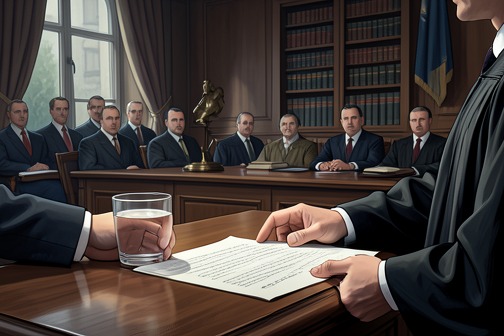
The [Trial Dispute over the Missing Glass and Fingerprint Evidence](entity:event-recall-event-6c744273d1b4) turns a physical exhibit into the center of a contest over proof, police handling, and procedural fairness. Prosecutors had built part of their case around fingerprints reportedly lifted from a drinking glass at the crime scene, but the glass itself disappeared before trial. The court allowed testimony about those prints despite the defense’s objection, yet the absence of the object remained a visible weakness in the prosecution’s case. Later testimony and [Larren Lyttle](entity:character-recall-character-larren-lyttle-d884c770eae6)’s decision to end the trial exposed how little the circumstantial evidence could establish; a still later account by [Rusty Sabich](entity:character-recall-character-rusty-sabich-45b128862904) connected the glass to [Barbara Sabich](entity:character-recall-character-barbara-sabich-8e06df98492f)’s effort to frame him.
## The glass as evidence
Before trial, Rusty assessed the case against him as a collection of circumstantial links. Prosecutors listed witnesses including [Dan Lipranzer](entity:character-recall-character-dan-lipranzer-3c94be383cf0), [Mrs. Krapotnik](entity:character-recall-character-mrs-krapotnik-5208f9b5de5a), [Raymond Horgan](entity:character-recall-character-raymond-horgan-94b7cd2876a4), [Tommy Molto](entity:character-recall-character-tommy-molto-196f33857fc7), and [Painless Kumagai](entity:character-recall-character-painless-kumagai-c9bb4e331e99). Their physical and scientific evidence included telephone records showing a call from Rusty’s home to [Carolyn Polhemus’s apartment](entity:location-recall-location-carolyn-polhemus-s-a-54b482d8bd36), biological evidence, and fibers matching carpet in Rusty’s home. The glass was especially important because it supposedly bore two of Rusty’s fingerprints, matched against prints he had provided years earlier for his county employment file. None of the listed witnesses, Rusty observed, could testify to seeing him kill Carolyn or to an actual confession.
The prosecution had repeatedly promised the glass would be produced. On the third morning of trial, however, [Nico Delia Guardia](entity:character-recall-character-nico-delia-guardia-30522ffb2b62) acknowledged that it could not be found. Larren Lyttle immediately challenged the prosecution’s position: the defense had lacked a chance to examine the exhibit, and the state had referred to it repeatedly in its opening statement. Nico said the police had apparently possessed it last. Lyttle treated that answer as a serious failure, barred further discussion of evidence no one could locate, and left open whether the glass might later be admitted if it were found.
The loss disrupted the prosecution’s planned order of proof. Its first witness was expected to describe the crime scene and mention the glass, so Lyttle’s ruling forced the state to reconsider how to proceed. The next day, Nico described a six-hour, item-by-item search of the police evidence room. Neither side disputed that the glass was missing; instead, their written arguments addressed whether witnesses could still describe fingerprint evidence derived from it.
## The ruling and its limits
[Alejandro Stern](entity:character-recall-character-alejandro-stern-4800e0c61419) argued that Rusty should not have to confront scientific testimony without being able to inspect the physical object on which it depended. The prosecution replied that the chain of custody had not been challenged: testimony from [Harold Greer](entity:character-recall-character-harold-greer-b1ffb4a492ae), Lipranzer, and laboratory supervisor [Maurice Dickerman](entity:character-recall-character-maurice-dickerman-faa32a922669) would establish that fingerprint lifts had been taken from the glass the day after the murder. The judge faced a choice that, as Rusty understood it, fell within the permissible bounds of legal judgment either way. Excluding the testimony could devastate the state’s case; admitting it risked allowing the jury to hear conclusions about an exhibit the defense had never examined.
Lyttle admitted the fingerprint testimony over objection. He said the evidence’s importance influenced him, but stressed that the defense’s skepticism was understandable and that the missing object could not be presented. He also pointed to the police evidence room’s history of poor record-keeping and handling of exhibits. Although he did not decide that the prosecutors had acted in bad faith, he warned that proof of such conduct could end the prosecution. He planned a strongly worded limiting instruction for the jury, and Rusty’s wife, [Barbara](entity:character-recall-character-barbara-d5f53d2adcbd), objected to the ruling as unfair: Rusty had not even had an opportunity to look at the glass.
The instruction did not erase the evidence, but it shaped how the jury could regard it. Lyttle acknowledged the possibility of acquittal and made the case’s evidentiary uncertainty part of the courtroom record. Dickerman then explained fingerprint identification with photographs and slides, including images of the bar, the glass, the lifts, and enlargements from Rusty’s employee file card. Red arrows marked the points of comparison. His polished presentation gave the prosecution a forceful account of the fingerprints, even though the jury could not see or inspect the original glass.
## The evidence under pressure
The dispute mattered beyond the missing exhibit itself: the case depended on the combined force of inferences about Rusty’s presence, contact with Carolyn, and the timing and meaning of the scientific evidence. Dickerman’s testimony made the fingerprint comparison concrete, but it could not restore the defense’s lost opportunity to examine the object. Nor did a fingerprint, by itself, establish when it had been left or prove that Rusty had committed murder. The limiting instruction put that gap into view even as the judge allowed the prosecution to proceed.
The prosecution’s biological evidence also came under pressure. During Stern’s cross-examination, he asked Painless Kumagai whether Carolyn was a woman who knew she could not conceive. Kumagai answered no. The exchange became relevant to the larger question of what the scientific evidence could actually establish. In his later explanation to Barbara, Rusty said that Carolyn had in fact undergone a tubal ligation, and that the prosecution had failed to account for it. He also described other traces—the home telephone record, carpet fibers, and a third fingerprint—as consequences of Barbara’s effort to direct suspicion toward him. That retrospective account recasts the apparent accumulation of evidence: details that had seemed to converge on Rusty could instead be understood as traces of a setup, compounded by investigative assumptions and missed clues.
## The trial ends
After considering the case, Lyttle concluded that the evidence was inadequate to send the jury into deliberations. He found no proof of motive, no concrete evidence establishing an intimate relationship, and no effective proof that Rusty had had sexual relations with Carolyn on the night she died. He acknowledged that the state might be entitled to infer Rusty had been at the scene, but said the missing glass affected his confidence in the prosecution’s case. In his view, there was no direct proof that Rusty had murdered Carolyn, and the remaining evidence could not fairly support continuing the trial.
Lyttle granted the defense motion, discharged Rusty, and dismissed the case. His decision ended the prosecution without resolving the murder itself: it determined that the evidence presented could not justify continuing against Rusty, not who had killed Carolyn. The missing glass therefore carries two meanings. In court, it marks a failure of evidence custody that weakened the state’s ability to prove its case. In the novel’s later account, it belongs to a wider pattern of planted and misread traces, showing how forensic details can appear persuasive while remaining vulnerable to a different explanation.
Event 14
Defense Claim that Sabich Was Framed
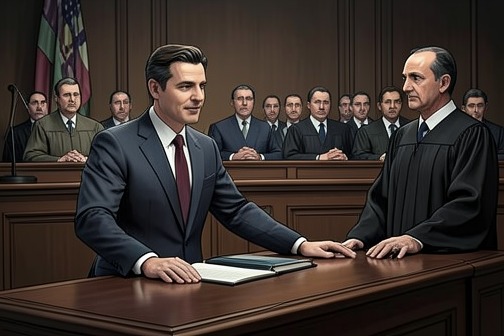
The defense claim that [Rusty Sabich](entity:character-recall-character-rusty-sabich-45b128862904) was framed is a sudden strategic turn in his murder trial: [Sandy Stern](entity:character-recall-character-sandy-stern-40ea4b75c8ab) moves beyond undermining the prosecution’s witnesses and openly alleges that the case against his client was manufactured. The assertion raises the stakes for both sides. It offers a way to make antagonism and possible prosecutorial motive relevant, but the judge warns that the defense must substantiate the charge or risk having the entire line of cross-examination struck in front of the jury.
## The Case the Defense Challenges
Rusty understands the prosecution’s case as a substantial but circumstantial accumulation of evidence. Its witness list includes [Dan Lipranzer](entity:character-recall-character-dan-lipranzer-3c94be383cf0), who is expected to address Rusty’s instruction not to subpoena his home telephone records; [Mrs. Krapotnik](entity:character-recall-character-mrs-krapotnik-5208f9b5de5a), who saw someone in [Carolyn Polhemus](entity:character-recall-character-carolyn-polhemus-749a3ce67692)’s building but is unsure whether that person was the stranger present on the night of the murder; and a maid from [Nearing](entity:location-recall-location-nearing-ce6695f065fb), whose statement places Rusty on a bus near the time of the killing. [Raymond Horgan](entity:character-recall-character-raymond-horgan-94b7cd2876a4), [Tommy Molto](entity:character-recall-character-tommy-molto-196f33857fc7), [Eugenia Martinez](entity:character-recall-character-eugenia-martinez-98205c6fd15e), [Dr. Robinson](entity:character-recall-character-dr-robinson-a8ad3c610482), and scientific experts including [Painless Kumagai](entity:character-recall-character-painless-kumagai-c9bb4e331e99) are also listed. None, as Rusty assesses the case, claims to have witnessed him kill Carolyn, and the prosecution has no witness to a confession apart from Molto’s interpretation of a remark Rusty made.
The physical evidence gives the case its force. Carolyn Polhemus’s bar glass bears two of Rusty’s fingerprints, identified by comparison with prints he supplied when he became a deputy prosecutor. Telephone records show a call from Rusty’s home to Carolyn’s roughly an hour and a half before her death. A vaginal smear contains sperm of Rusty’s blood type, while a contraceptive compound indicates consensual sex. Fibers matching the carpet in Rusty’s home are found on Carolyn’s clothing, on her body, and in the living area. Together, these items form the evidentiary structure the defense’s claim will challenge—not by denying that the evidence exists, but by questioning the account the prosecution builds from it.
## Stern Makes the Allegation Public
The accusation arrives after Stern has rejected the framing approach for weeks. Rusty believes the defense had been pursuing a quieter argument: that Molto wanted Rusty’s job and pressed too hard to build a case, while [Nico Delia Guardia](entity:character-recall-character-nico-delia-guardia-30522ffb2b62) may have failed to recognize Molto’s ambition because of his own antagonism toward Rusty. In Stern’s view, the prosecution’s conduct could thus be explained through personal and professional motives without asserting that the evidence itself was fabricated.
Instead, Stern tells the court that the defense’s theory is that Rusty has been framed. Rusty is stunned by the change, which he had not been consulted about, and fears that the blunt allegation will make the trial’s corridor discussions a public spectacle. The accusation may also undermine the more restrained argument he thought Stern was making: that human frailty, rivalry, and overconfidence led to a mistaken prosecution. Stern’s directness changes the defense from an attack on credibility into a claim that the case was deliberately manufactured.
## The Court Sets the Terms
Stern carefully directs the allegation toward the possibility that Nico Delia Guardia was misled, rather than accusing him personally of bad faith. The distinction keeps attention on Tommy Molto, whom Stern has targeted from the beginning, and on how the prosecution’s case came to be assembled. When Molto calls the framing theory ridiculous, the judge notes that a history of antagonism may be relevant if the defense is genuinely going to try to prove that the case was manufactured. That relevance, however, carries a cost: it may open the door to a wide response from the prosecution.
The judge warns Stern that he is playing with fire. Unless proof of the charge is forthcoming, the court may strike all cross-examination on the subject in the jury’s presence. Stern does not retreat; he says the defense will offer evidence on the issue. The exchange turns the theory into a binding commitment rather than a passing insinuation. From this point, the defense must connect its challenge to evidence, and the prosecution has been warned that its response may receive considerable latitude.
## Evidence, Reversal, and Retrospective Meaning
The trial later makes the glass evidence itself a site of dispute. Fingerprint examiner Morrie Dickerman presents photographs, lifts, and enlargements, marking comparison points between the glass and Rusty’s employee file card. His testimony is professionally prepared and presents the matches with confidence. Yet a judicial instruction discussed during the proceedings gives the defense room to argue that an error may have occurred and that acquittal remains a permissible conclusion. The episode shows how a physical match can be powerfully presented without ending the dispute over what it proves.
Stern’s questioning of Painless Kumagai also turns on an evidentiary premise: whether Carolyn knew she could not conceive. Kumagai answers no when asked whether that was his expert opinion. The exchange does not, by itself, establish the defense’s larger theory, but it draws attention to the assumptions involved in interpreting the scientific evidence and to the limits of what an expert has actually concluded.
The novel’s later account gives the language of framing an unsettling second meaning. Rusty reconstructs [Barbara Sabich](entity:character-recall-character-barbara-sabich-8e06df98492f)’s actions as an attempt to direct suspicion toward him, describing how traces associated with her could be overlooked while evidence appeared to point to his home and telephone. This later explanation is distinct from Stern’s courtroom allegation against the prosecution: it places the act of framing within the private history surrounding the murder, rather than proving that the prosecutors manufactured their case. The contrast leaves the defense claim suspended between a risky legal tactic and a broader truth about how evidence can be made to tell a misleading story.
Event 15
Carolyn Polhemus's murder
[Carolyn Polhemus](entity:character-recall-character-carolyn-polhemus-749a3ce67692)’s murder on [April 1](entity:time-recall-time-april-1-518371dfb9fe) becomes the event around which the novel’s investigation, prosecution, and concealed private truth turn. Its apparent clues point toward [Rusty Sabich](entity:character-recall-character-rusty-sabich-45b128862904), but the case’s eventual reconstruction identifies [Barbara Sabich](entity:character-recall-character-barbara-sabich-8e06df98492f) as the killer, exposing the distance between a persuasive evidentiary story and what actually happened.
## Discovery and Early Account
Three nights after Carolyn’s death, [Raymond Horgan](entity:character-recall-character-raymond-horgan-94b7cd2876a4) discusses the case with Rusty. Raymond is grieving both as the former supervisor who hired Carolyn and as someone who had known her since her earlier work as a probation officer. He recalls her as intelligent and capable, but his account of the crime assumes an intruder: he believes someone broke in and that the case should not begin by looking among her friends and admirers. The murder is already entangled with office politics, public scrutiny, and personal loss.
Rusty challenges that first explanation. He points out that there are no broken windows or forced doors, details that sit uneasily beside Raymond’s assumption of a break-in. That early disagreement establishes a question the investigation will keep circling: whether the scene indicates a stranger’s intrusion or someone who could enter without forcing a way in. The uncertainty is consequential, but it does not immediately yield a suspect or explain why the crime was staged as it was.
The initial account from the police reports describes a fatal head injury and resulting hemorrhage. The medical report finds evidence of sexual activity, but only in the principal vaginal area; investigators have turned the apartment upside down without finding a murder weapon. These early findings supply fragments rather than a complete sequence. The distinction between what the investigators can establish and what they infer will shape the case as the physical evidence is assembled and interpreted.
When Rusty later examines the photographs, he struggles to maintain professional distance from the images of Carolyn. His response is conflicted: professional attention gives way to an involuntary sense of satisfaction, followed by recognition of her vulnerability and a feeling that she needs his help. The moment connects the investigation to Rusty’s private attachment to Carolyn, while making clear that his role as investigator is not emotionally detached.
## The Prosecution’s Circumstantial Case
By the time Rusty reviews the prosecution’s witness list, the case against him has taken a definite shape. It includes people who place him near Carolyn Polhemus’s building or on a bus route around the relevant period, along with [Dan Lipranzer](entity:character-recall-character-dan-lipranzer-3c94be383cf0), who may testify that Rusty told him not to subpoena Rusty’s home telephone records. Raymond Horgan, [Tommy Molto](entity:character-recall-character-tommy-molto-196f33857fc7), Rusty’s secretary, his psychiatrist, and scientific experts also appear on the list. Yet no witness claims to have seen Rusty kill Carolyn, and the prosecution has no confession to offer. Its case depends on physical traces and the interpretation placed upon them.
Those traces form a sequence that seems to connect Rusty to Carolyn and to the night of the murder. A bar glass bears two of Rusty’s fingerprints, identified against prints he had provided years earlier as a deputy prosecutor. Telephone records show a call from his home to Carolyn’s about an hour and a half before her death. Forensic testing finds sperm of Rusty’s blood type and a contraceptive compound in Carolyn’s body, which the prosecution’s interpretation treats as evidence of a consensual encounter. Fibers found on Carolyn’s clothing and at the scene are matched to the carpet in Rusty’s home. Each item appears to reinforce the others, but together they remain circumstantial: they establish contact and resemblance more readily than they establish who committed the killing.
The fingerprint testimony makes that distinction visible in court. [Maurice Dickerman](entity:character-recall-character-maurice-dickerman-faa32a922669), a skilled fingerprint examiner, explains how prints are formed and why their patterns are unique, then presents photographs of the glass, lifted impressions, and enlargements from Rusty’s employee file. Red arrows mark the points of comparison. The presentation gives the prosecution’s claim the clarity of a demonstration, but the judge has already told the jury that an error in the fingerprint evidence is possible and that acquittal remains a permissible conclusion. Dickerman’s technical confidence therefore arrives after the court has made room for doubt; the images can be persuasive without settling how or when the prints were left.
[Dr. Kumagai](entity:character-recall-character-dr-kumagai-d6db85a8493e)’s testimony attempts to join the separate findings into a reconstruction. Drawing on the forensic analyses and his examination of Carolyn’s body, he places sexual relations shortly before the fatal attack and interprets the evidence as indicating a consensual encounter. He also offers an opinion about the attacker’s handedness, while acknowledging that the available evidence cannot establish the attacker’s height without knowing Carolyn’s posture or the weapon’s length. In his account, the scene’s open doors and windows, together with the contraceptive evidence, suggest an effort to simulate rape and conceal the killer’s identity. He further infers that the person responsible knew something about criminal investigation and Carolyn’s work in the prosecutor’s office. These are expert conclusions built from evidence, not direct observations of the killer.
[Alejandro Stern](entity:character-recall-character-alejandro-stern-4800e0c61419)’s cross-examination exposes a limit within that reconstruction by asking whether Carolyn knew that she could not conceive. Dr. Kumagai answers no. The exchange does not itself identify another perpetrator, but it unsettles the apparent fit between the prosecution’s biological evidence and its account of what happened. As the trial proceeds, the question of whether the forensic findings have been correctly interpreted becomes as important as the findings themselves.
## The Hidden Construction of the Crime
In October, while repairing the fence in the yard, Rusty Sabich recognizes the [Whatchamacallit](entity:object-recall-object-whatchamacallit-e8c087cfdc1d) he is using as the weapon that killed Carolyn Polhemus. The black iron tool, inherited from Barbara Sabich’s father, had been brought to their home by [Barbara](entity:character-recall-character-barbara-d5f53d2adcbd)’s mother after his death. Rusty had noticed blood and a blond hair on it after the trial, then taken it to the basement and washed it while Barbara watched from the stairs. The ordinary work of replacing fence posts thus brings the concealed crime into the domestic space where its evidence had been hidden.
Rusty’s later reconstruction gives Barbara’s actions a deliberate sequence. He believes she logged into a university computer to establish an alibi, then went to Carolyn’s apartment, where Carolyn let her in. Barbara used the Whatchamacallit, bound Carolyn with cord, left a glass at the bar, planted male fluid from a small bag, and unlocked the doors and windows before leaving. Her aim, as Rusty describes it, was to direct suspicion toward him by making the scene appear to point to a sexual encounter and a familiar killer. The account identifies the staging without making it proof that every detail of Rusty’s reconstruction is independently established.
The plan depended on assumptions about which traces investigators would notice and how they would interpret them. Rusty points to carpet fibers on Barbara’s skirt, hair evidence, the call traced through the home telephone records, and a third fingerprint on the glass as details she had not adequately accounted for. The biological evidence also rested on a false premise: Carolyn had had her tubes tied, a fact neither the investigators nor Barbara had anticipated. In this account, evidence that had seemed to converge on Rusty instead records the limits of Barbara’s design—and the limits of the prosecution’s interpretation of the scene.
Barbara says she would have told the truth if called to testify. Rusty says he understands, but believes that her account would have sounded like a desperate attempt to save him and that no one would have believed she was responsible. Her willingness to speak does not undo the ordeal he has endured, and his acceptance does not remove her guilt. By the end, their relationship has recovered some feeling, but the murder remains between them as a truth they cannot freely share.
## The Crime in the Domestic Space
The murder’s last return is not in court but in the yard and basement of the Sabich home. As Rusty washes the Whatchamacallit, Barbara stops on the stairs; he tries to seem cheerful and whistles. The small exchange makes the concealment itself part of their shared life: the evidence is handled at home, in her presence, while ordinary gestures preserve the appearance of normality. Later, the same tool reappears in Rusty’s mind during fence repairs, turning a practical task into recognition. The crime’s consequence is therefore not only that its clues misdirected the investigation, but that its physical trace remained embedded in the couple’s domestic world, where recognition could not make the past speak openly.
Event 16
North Branch courthouse corruption scandal
The [North Branch courthouse corruption scandal](entity:event-recall-event-north-branch-courthouse-7b1cbfa18f52) is the hidden history behind [Leon Wells](entity:character-recall-character-leon-wells-57eb25746272)’s old arrest file: [Carolyn Polhemus](entity:character-recall-character-carolyn-polhemus-749a3ce67692) arranged a payment intended to make Wells’s problems disappear, and the trail led to Judge [Larren Lyttle](entity:character-recall-character-larren-lyttle-d884c770eae6). The episode reaches beyond a single bribe. It joins courtroom discretion, private relationships, police investigation, and political self-protection, then reappears years later when [Rusty Sabich](entity:character-recall-character-rusty-sabich-45b128862904) tries to understand why Carolyn’s records were being handled so carefully.
## Background and the First Arrangement
[Raymond Horgan](entity:character-recall-character-raymond-horgan-94b7cd2876a4)’s later account places the arrangement in the [North Branch](entity:location-recall-location-north-branch-5c27a258e1b5), where Carolyn Polhemus was a probation officer. People on bond told her their stories; she began putting in a word with Judge Larren Lyttle, who, Horgan said, went along with her requests. In the version Horgan related to Rusty Sabich, one person she had helped gave her a hundred-dollar bill. Carolyn brought the money to Lyttle to ask what should be done with it. Rather than treating the payment as a warning of a corrupt arrangement, the two treated it as a joke and spent it on dinner. Their relationship then became an affair.
Horgan described Lyttle as regarding the episode like a fraternity prank. He said Carolyn’s lack of scruples coexisted with considerable intelligence, and that she had been struggling financially while paying law-school tuition and earning a probation officer’s salary. He hired her after Lyttle appealed to him on her behalf, doubled her salary, and expected her to remain a deputy in an assignment he considered undesirable. Instead, she proved highly capable. Horgan eventually moved Lyttle downtown, where he continued to regard the judge’s felony work as distinguished. According to Horgan, the two had become respectable enough that they barely spoke in the years before the scandal resurfaced.
The hundred-dollar episode and Leon Wells’s payment reveal different parts of the arrangement, not a fully documented single transaction. Wells’s account concerns a payment of fifteen hundred dollars, made roughly eight or nine years before Rusty and [Dan Lipranzer](entity:character-recall-character-dan-lipranzer-3c94be383cf0) questioned him. Wells initially resisted discussing it, particularly with police arriving at his home in the middle of the night. Once pressed, however, he described Carolyn as the person who had arranged the matter: she told him where to go and how to bring the money, and she was present when the payment was made. Her manner, as he remembered it, was cool and practiced.
## The Wells Payment and Lyttle’s Identification
The questioning began with Lipranzer asking Wells about having paid fifteen hundred dollars to a deputy prosecuting attorney to make his problems go away. Wells did not immediately confirm the story. The crucial turn came when Rusty asked directly whether the judge had been paid. Wells agreed. He identified the judge as a Black man and said he recognized the voice from hearing it in court. Rusty then checked the order dismissing the matter: its signature belonged to Lyttle, whose distinctive handwriting he had encountered repeatedly during the preceding months.
That exchange gave the old case file a sharper meaning. Wells’s account connected Carolyn’s directions and presence to the delivery; his recognition and the dismissal order connected the transaction to Lyttle. The evidence presented in these recollections does not lay out every step between Wells’s money and the judge, nor does it establish the full reach of the arrangement. It does, however, make the bribery more than rumor: a former defendant describes the payment, identifies the judge, and supplies a reason his courtroom voice was familiar.
## Investigation, Warning, and Uncertain Cover-Up
[Sandy Stern](entity:character-recall-character-sandy-stern-40ea4b75c8ab) later offered Rusty a cautious account of what followed. He understood that Raymond Horgan learned what was happening and demanded that it stop. Police officers in the 32nd District began assembling evidence, but people who knew of that work feared that investigating corruption at the [North Branch Courthouse](entity:location-recall-location-north-branch-courtho-5363f1bd9536) would bring down many people besides Lyttle. Stern said that one or two people concerned about the inquiry had told him their version, and that they decided the prosecuting attorney should be advised that an investigation was coming. He suspected that giving Horgan this warning may also have been calculated to prompt him to alert his old friend and urge him to stop. Stern emphasized that he could not confirm this account and had never tried to verify it.
Horgan gave Rusty a narrower and more personal explanation. He said he had spoken with Lyttle about the matter only once, that the conversation was brief, and that he did not know exactly what had happened. In his telling, Carolyn brought Lyttle the first hundred dollars, and the two treated it as an amusing incident. Horgan also said he had hired her with knowledge of the earlier episode, while insisting that their relationship later faded and that he respected Lyttle’s work. Set beside Stern’s account that Horgan became knowledgeable and demanded that the conduct cease, these statements leave a consequential uncertainty: Horgan was close enough to the people involved to know of the affair and the payment, but the record presented through these accounts does not establish precisely what he knew, when he knew it, or what he did beyond the limited conversation he described.
The handling of Leon Wells’s file brought that uncertainty back into the present. Horgan told Rusty that he had informed Lyttle when a letter arrived concerning the file. On the day Carolyn’s body was found, Lyttle called Horgan and described the matter as politically sensitive, asking him to collect it. Horgan recalled doing so, and said he later gave the file to Rusty when Rusty asked for it. The recollection makes Lyttle’s concern tangible: the old case was not merely an obscure record but something he sought to have removed from ordinary circulation just as Carolyn’s murder made her past newly dangerous.
## Institutional Stakes and Narrative Significance
The scandal unfolds within a court system where a great deal of consequential work is handled amid pressure and routine discretion. In the branch courts, defendants make first appearances for bail, misdemeanors are tried, and preliminary hearings take place in felony cases. Prosecutors and defense lawyers bargain over pleas; attorneys press clerks to move cases forward; police officers and lawyers often have only partial information in a crowded courtroom. That setting does not itself prove corruption, but it shows how much depends on individual judgment and on the records, recommendations, and relationships that circulate through the system.
Rusty’s account of the [Kindle County police force](entity:organization-recall-organization-413f871e1d1e) offers a wider institutional frame. He describes a department in which officers make allowances for personal loyalties and favors, each person playing for a private team rather than following a reliable shared rulebook. That description helps explain why a local investigation could provoke fears far beyond the judge directly implicated: opening one file might expose a network of people who had participated, looked away, or feared what a full inquiry would uncover. It is a portrait of systemic vulnerability, not proof that every person in the courthouse or police department shared responsibility for the North Branch dealings.
The scandal also changes the meaning of Carolyn’s professional history. She appears both as an effective deputy and as someone who knew how to arrange a payment, direct a defendant, and remain present when it was delivered. Lyttle appears both as a judge whose work Horgan praised and as the recipient identified by Wells. Horgan appears as a mentor and employer who knew the participants, but whose later account cannot settle the extent of his intervention. By returning to the Wells matter through testimony, an old dismissal order, and the recovery of a file, the narrative makes institutional truth depend on fragments that have survived informal handling. The scandal is therefore not only a past act of bribery; it is a test of whether the people and procedures entrusted with uncovering corruption can be trusted to expose its full reach.
Event 17
Night Saints investigation
The [Night Saints investigation](entity:event-recall-event-night-saints-investigat-cf02be845d7b) was a large-scale police and grand-jury campaign led by [Rusty Sabich](entity:character-recall-character-rusty-sabich-45b128862904) against one of [Kindle County](entity:location-recall-location-kindle-county-bdf0d318a2ad)’s largest street gangs. It advanced [Raymond Horgan](entity:character-recall-character-raymond-horgan-94b7cd2876a4)’s political fortunes and produced an unprecedented run of convictions, yet left much of the gang active. In Rusty’s recollection, the operation’s public success rests beside a more precarious truth: its evidence depended overwhelmingly on [Morgan Hobberly](entity:character-recall-character-morgan-hobberly-48c0eb67f8cc), a covert informant who would later be found dead.
## Origins and Political Stakes
Rusty became involved with the Night Saints during his fourth year as a deputy prosecutor, after joining Raymond Horgan’s inner circle. Horgan selected him to lead the investigation, which he announced at a moment calculated to make it the centerpiece of his first reelection campaign. A successful assault on a major street gang promised to blunt the public image of Horgan as too sympathetic to offenders. For Rusty, meanwhile, the assignment brought a new kind of prominence: it was his first time working with reporters alongside him, and the investigation would occupy almost four years of his life.
The gang had originated as the Outlaws of the Night, a small, poorly disciplined group in the [North End](entity:location-recall-location-north-end-02ba2a837ab3) led by [Melvin White](entity:character-recall-character-melvin-white-d3055a46b1e8). The investigation was therefore aimed at a network with an established history, not a single isolated crew. Its political usefulness and its scale were bound together: Horgan could present the campaign as a forceful response to gang violence, while Rusty was tasked with turning a diffuse organization into prosecutable cases.
## Morgan Hobberly and the Investigation
Rusty regarded Morgan Hobberly as the decisive exception in an operation otherwise hampered by uncertain information. Police and federal agencies had informants inside the gang, but the gang also had people gathering intelligence of its own. Sources could produce two or three competing accounts of the same matter, leaving investigators unsure which to trust. Morgan, by contrast, was genuinely inside the organization and had the gang’s confidence, though Rusty’s account does not describe him as having sought that position for its own sake.
Morgan secretly began working for the state because he had come to regard the gang’s methods as evil. Investigators fitted him with a body recorder, and he attended meetings of the gang’s leaders. He also supplied telephone numbers that investigators connected to pen registers and, eventually, wiretaps. Across the seventy days he helped the investigation, the team gathered virtually all the evidence that would support trials over the following two years. The operation’s apparent institutional reach thus rested on a brief, unusually productive period of cooperation by one insider.
## Convictions and Limits
By the time Horgan ran for reelection again, the investigation had led to the convictions of 147 identified gang members. The press celebrated the result as an unprecedented triumph for Horgan. Rusty’s retrospective immediately qualifies that acclaim: more than 700 members remained on the street, continuing their previous activities. The convictions represented substantial prosecutorial output, but not the dismantling of the gang. The contrast exposes the difference between a campaign’s measurable courtroom results and its less easily claimed effect on the organization it set out to confront.
That difference also shapes the event’s political meaning. Horgan gained a powerful electoral centerpiece, and Rusty gained public visibility, but the gang’s persistence prevented the operation from amounting to a clean victory. The investigation could count convictions; it could not claim that the street-level problem had disappeared. Its success was real, but bounded by the scale and resilience of the group it targeted.
## Morgan’s Death and the Recollection’s Aftermath
The account of the operation eventually turns to Morgan’s death. In November, Rusty learned that Morgan had been found dead; his death was determined to be by drowning. Rusty would not allow [Dr. Kumagai](entity:character-recall-character-dr-kumagai-d6db85a8493e) near the body. The discovery gives the investigation’s reliance on Morgan a grave personal consequence: the person who had supplied its crucial access and much of its evidence was no longer available, while the campaign’s larger political and institutional results remained in view.
As a recalled episode within Rusty’s narration, the investigation is presented both as a formative career achievement and as a lesson in the limits of official triumph. Its sequence moves from Horgan’s political calculation, through Rusty’s rise and Morgan’s essential cooperation, to a tally of convictions that cannot disguise the gang’s survival. The operation’s legacy is therefore double: it demonstrated what a focused investigation could prosecute, and how little that accomplishment alone could guarantee about what happened next.
Event 18
Morgan Hobberly's murder
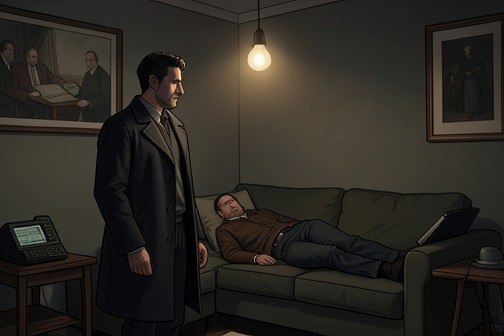
[Morgan Hobberly's murder](entity:event-recall-event-morgan-hobberly-s-murde-49579b88dd47) is a turning point in [Rusty Sabich](entity:character-recall-character-rusty-sabich-45b128862904)'s account of a long investigation into the Night Saints: the trusted informant whose work had supplied the case's evidence is found dead, and the circumstances offer no identified killer. Rusty recounts the discovery retrospectively, setting Morgan's death against the value of his service and the investigators' failure to keep him safe.
## Morgan's Role in the Investigation
Rusty describes Morgan as an authentic insider, welcomed by the Night Saints rather than present among them solely by choice. Morgan's decision to work secretly for the state came, in Rusty's account, from a moral conviction that Harukan's ways were evil. His position gave the investigators access that other sources could not reliably provide: the organization had informants working for police or federal agencies, while [Melvin White](entity:character-recall-character-melvin-white-d3055a46b1e8) had also placed people inside to gather counter-intelligence. Investigators could receive several conflicting accounts at once, making Morgan's access especially important.
During the seventy days he assisted the state, Morgan wore a body recorder and attended meetings of the group's leaders. He supplied telephone numbers that investigators connected to pen registers and eventually tapped. Rusty credits those seventy days with producing virtually all the evidence used in trials that continued for another two years. Morgan's contribution was therefore not incidental to the inquiry; it was the brief, concentrated source on which its later prosecutions depended.
## Discovery and Cause of Death
[Lionel Kenneally](entity:character-recall-character-lionel-kenneally-b3c0a3074ac1) told Rusty that Morgan had been found after a call from the [Public Forest](entity:location-recall-location-public-forest-417ac57f23e3) district command. When Rusty arrived, police, paramedics, and reporters were already at the scene. Kenneally's grave manner conveyed that something had gone badly wrong, and Rusty understood where to look for Morgan.
The coroner determined that Morgan had died by drowning in the waste pool of a public outhouse. Rusty did not allow [Dr. Kumagai](entity:character-recall-character-dr-kumagai-d6db85a8493e) near the body. The account establishes the cause and location of death but does not identify who was responsible or explain how Morgan came to be there. Its restraint leaves a sharp gap between what the investigation had gained through Morgan and what it could establish about his death.
## Consequences and Narrative Significance
Rusty presents Morgan's death as the loss of the investigation's indispensable source and as a failure of protection. The same account that describes the operation's success makes its dependence on one person unmistakable: the investigators had gathered the evidence for years of trials, yet Morgan himself did not survive the work that made those cases possible.
The recollection also interrupts the procedural scale of the gang investigation with a single informant's fate. Rusty recalls Morgan not merely as a source, but as someone whose presence had seemed beyond ordinary danger. That perception collapses at the discovery, while the question of responsibility remains unanswered. The event consequently marks both a concrete loss to the state investigation and a limit on what Rusty's narrative can resolve: Morgan's importance is clear, but the circumstances of his death yield no named perpetrator.
Event 19
Kumagai cross-examination revelation
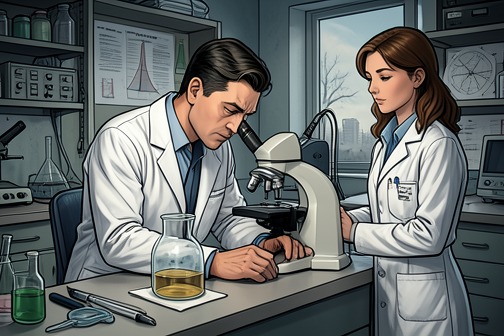
The [Kumagai cross-examination revelation](entity:event-recall-event-kumagai-cross-examinati-4184d053a358) turns a medical record and an uncertain sample history into a major challenge to the prosecution’s forensic case against [Rusty Sabich](entity:character-recall-character-rusty-sabich-45b128862904). [Alejandro Stern](entity:character-recall-character-alejandro-stern-4800e0c61419) exposes a conflict between the prosecution’s interpretation of a sample containing spermicide and the evidence that [Carolyn Polhemus](entity:character-recall-character-carolyn-polhemus-749a3ce67692) had undergone a tubal ligation. When [Painless Kumagai](entity:character-recall-character-painless-kumagai-c9bb4e331e99) cannot establish that the sample was collected from Carolyn, the courtroom’s understanding of a central piece of physical evidence changes: it may not support the conclusions the prosecution has built upon it.
## The sample as a foundation of the case
The forensic issue had already helped give the case its apparent coherence. In the report Rusty reads, a chemist identifies nonoxynol 9 in material collected from Carolyn and concludes that it came from spermicidal jelly. The report explains why the sample contained no viable spermatozoa. For the prosecution, the sample also fits a wider physical-evidence narrative: it contains spermatozoa associated with Rusty’s blood type, while the presence of a contraceptive compound implies consensual sex. Alongside the glass bearing Rusty’s fingerprints, telephone records, and carpet fibers associated with his home, the sample appears to link him to Carolyn and the night she was killed.
That apparent fit does not make the evidence direct. Rusty assesses the prosecution’s case as circumstantial: no witness claims to have seen him kill Carolyn, and the physical evidence must carry the argument. The sample’s importance therefore rests not only on what the chemist identified, but also on whether the material actually came from Carolyn and whether the resulting interpretation is sound. Stern’s cross-examination brings those separate questions into the open.
## Stern turns to the medical records
Stern first asks whether Kumagai’s expert opinion is that Carolyn knew she could not conceive. Kumagai answers no. Stern then has him read a passage from his own autopsy notes, which records that Carolyn’s fallopian tubes had been ligated and separated. Kumagai says the passage is not right, but the discrepancy puts his own contemporaneous record against his denial that Carolyn had undergone the procedure.
The questioning supplies a further basis for testing that denial. [Quentin Kemp](entity:character-recall-character-quentin-kemp-e66c8c3c0ffe) confirms the medical fact, and Stern places in Kumagai’s hands records from the gynecologist who performed Carolyn’s tubal ligation six and a half years earlier, after she had an abortion. The records turn the matter from a dispute over memory or expert opinion into a documented medical history. Kemp’s meeting with the gynecologist the previous afternoon also comes into view as part of the defense’s preparation, although the evidence does not establish precisely what he learned at that meeting.
The discovery matters to the spermicide theory. Stern asks whether the facts indicate that Carolyn did not use spermicide on [April 1](entity:time-recall-time-april-1-518371dfb9fe), and whether the absence of spermicide traces in her apartment might explain the result. He then presses the consequence: if Carolyn was not using spermicide, could the sample containing it have come from her body? The questioning does not itself identify where the sample originated, but it forces the prosecution’s expert to confront a conflict between the sample’s reported contents and the circumstances surrounding Carolyn.
## The chain of collection comes under scrutiny
Kumagai’s difficulty is not limited to the disputed autopsy note. Asked whether the specimen sent to the chemist was taken from Carolyn, he refers to his regular procedure. Stern distinguishes following a routine from personally remembering the particular collection: Kumagai acknowledges that he does not clearly recall collecting, marking, and sending this specimen. He cannot rule out the possibility that it was not taken from Carolyn, and at last says that such a possibility exists.
That concession is carefully limited. Kumagai does not testify that the sample was taken from someone else, nor does the exchange establish how any error might have occurred. What changes is the certainty with which the sample can be treated as Carolyn’s. A laboratory finding may be accurate about the material it received while still failing to establish that the material came from the person whose body it was meant to represent. Stern’s questioning exposes that distinction without supplying a definitive alternative account.
The method of the cross-examination gives this uncertainty formal force. Stern has the court reporter mark the earlier questions and answers for possible reading back, then returns to the contradictions between Kumagai’s testimony, the autopsy notes, and the outside medical records. The sequence makes the testimony itself part of the evidence: the jury hears not just an expert conclusion but also the limits of the expert’s recollection and the documentary basis for challenging it.
## Consequences for the prosecution’s theory
The revelation bears directly on the prosecution’s attempt to characterize Carolyn’s death as a staged rape. Its theory, as put to Kumagai on direct examination and restated by Stern, is that Rusty staged such a scene, using knowledge of investigative methods and of Carolyn’s work in the prosecutor’s office. But the spermicide evidence had helped support an account of sexual activity, while the newly established tubal ligation and the absence of spermicide traces in Carolyn’s apartment raise questions about how the sample came to contain the compound. The cross-examination weakens the connection between that forensic result and the prosecution’s interpretation of the scene.
The uncertainty also bears on the wider evidentiary pattern. The prosecution’s case includes Rusty’s fingerprints on a glass, call records, and fibers associated with his home; the sample is one element among several, not the whole case. Earlier in the trial, fingerprint testimony had also become vulnerable to challenge, and Rusty describes the prosecution’s case as dependent on physical and scientific evidence. The Kumagai exchange adds a distinct problem: the question is no longer only what a forensic analysis found, but whether the sample’s identity and handling can sustain the conclusion drawn from it.
The episode does not solve Carolyn’s murder or prove that Rusty was framed. Its consequence is narrower and consequential: the prosecution’s expert cannot affirm that the specimen was collected from Carolyn, and the evidence allows the jury to consider that it may not have been. In a case without an eyewitness to the killing, that gap matters. The revelation makes the courtroom’s scientific certainty contingent on the chain of collection, and turns a seemingly incriminating laboratory result into a contested piece of circumstantial evidence.
Event 20
Leon Wells's revelation about the bribe
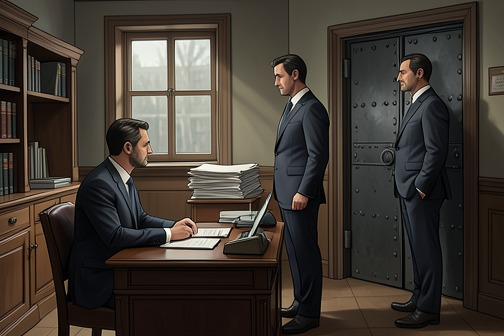
[Leon Wells](entity:character-recall-character-leon-wells-57eb25746272)’s late-night admission gives [Rusty Sabich](entity:character-recall-character-rusty-sabich-45b128862904) and [Dan Lipranzer](entity:character-recall-character-dan-lipranzer-3c94be383cf0) a concrete account of a long-hidden courthouse bribe: Leon says he paid $1,500 to a deputy prosecutor to make his legal problems go away, with [Carolyn Polhemus](entity:character-recall-character-carolyn-polhemus-749a3ce67692) arranging the payment and Judge [Larren Lyttle](entity:character-recall-character-larren-lyttle-d884c770eae6) receiving it. The meeting does more than uncover an old corrupt transaction. It connects Carolyn to the courthouse scandal and gives Rusty a document against which Leon’s recollection can be checked.
## Background and Stakes
The meeting takes place against a justice system already shown to be vulnerable to divided loyalties and political pressure. In the prosecutor’s office, [Tommy Molto](entity:character-recall-character-tommy-molto-196f33857fc7)’s unexplained absence becomes a political problem as much as a staffing question: firing him could let [Nico Delia Guardia](entity:character-recall-character-nico-delia-guardia-30522ffb2b62) accuse [Raymond Horgan](entity:character-recall-character-raymond-horgan-94b7cd2876a4) of targeting his allies, while retaining him could benefit Nico in another way. Rusty and [Mac](entity:character-recall-character-mac-416206506779) settle on placing Molto on Unauthorized Leave, a category created for the occasion, while Rusty worries that no trusted person has confirmed Molto is alive. The episode establishes an atmosphere in which personnel decisions, trust, and investigation cannot be cleanly separated.
The broader institutional setting is equally compromised by mundane limits and informal allegiances. When Rusty tries to have latent fingerprints run through the department’s computer, the obstacle is not the equipment but another section’s claim to the department’s only machine. Elsewhere, Rusty reflects that officers routinely favor their own networks of colleagues, relatives, informants, and local contacts rather than follow a uniform rulebook. Leon’s account will describe corruption on a more specific scale, but it emerges from a world in which official procedure is already entangled with private interests.
## The Late-Night Visit
Lipranzer’s effort to reach Leon begins with a knock at his door in the early hours. He calls out that he is police and wants to talk; the two men wait, and the reinforced steel doors prevent them from simply forcing their way in. Once Leon is speaking with them, Lipranzer raises a payment made eight or nine years earlier: $1,500 to a deputy prosecutor, intended to make Leon’s problems disappear. The question is pointed and specific, but Leon initially refuses to cooperate. He protests that he will not discuss the matter with a white policeman who has come to his home at three in the morning, then closes his eyes as if to end the conversation.
Lipranzer does not turn the encounter into a show of force. He moves close to Leon, crouches beside the bed, and points Rusty out to him. The shift in address matters: the question is no longer only whether Leon will answer a police officer, but whether he will acknowledge the matter in front of Rusty. Leon eventually admits that he paid the money. His confirmation transforms the visit from a failed attempt to locate a witness into a direct disclosure by the person who made the payment.
## Carolyn’s Role and the Judge’s Identity
Leon goes further than acknowledging the payment. He says Carolyn arranged the transaction, directed where the money should go, and was present when he made the drop. His account depicts her as actively managing the mechanics of the bribe, rather than as someone merely connected to the people involved. Leon also describes her as composed during the handoff. The disclosure changes the significance of Carolyn’s relationship to the old case: she appears in Leon’s telling as its organizer and intermediary.
When Lipranzer asks who received the money, Rusty supplies the answer he has begun to suspect: the judge. Leon nods and identifies the judge as a Black man, saying he recognized the voice from court. Rusty checks the dismissal order he has kept in his pocket. The signature is Larren Lyttle’s, familiar to Rusty from repeated work with the judge’s orders. The scene therefore brings together two forms of evidence: Leon’s recollection of the payment and the named judge’s signature on the order dismissing the case. The signature does not by itself prove every part of Leon’s account, but it gives Rusty a concrete record that corresponds to Leon’s identification.
## Consequences and Significance
By nearly five in the morning, Rusty and Lipranzer are at Wally’s, an all-night restaurant by the river, continuing to consider what Leon has told them. Lipranzer is still agitated by the encounter. The change in setting allows the immediate pressure of the bedroom conversation to give way to the problem of interpreting its consequences: the admission implicates a judge and Carolyn in a transaction that had once been concealed behind an ordinary-looking dismissal.
The revelation also belongs to a larger pattern of evidence mishandled or obscured within the investigation. Later, Lipranzer explains that he had taken Carolyn’s bar glass to the laboratory, then kept it in a drawer after the receipt incorrectly suggested it had been returned to evidence. He says no one noticed the glass was missing because receipts were signed without being checked against the evidence itself. That episode is separate from Leon’s testimony, but the parallel sharpens the novel’s account of institutional weakness: important facts can be hidden not only through deliberate corruption but through routine failures of custody and oversight.
Leon’s admission is thus both a disclosure and a test of how much the official record can establish. He names the payment, describes Carolyn’s role, and recognizes Lyttle; Rusty finds the judge’s signature on the dismissal order. Their convergence gives the old bribery suspicion a specific chain of people and actions, while leaving the account to be judged against the limits of memory and documentary proof. The scene’s force comes from that movement—from a reluctant denial in a darkened room to a named judge on a piece of paper—and from the larger question it raises about whose interests the machinery of justice has served.
Event 21
Rusty Sabich murder trial and dismissal

The [Rusty Sabich murder trial and dismissal](entity:event-recall-event-rusty-sabich-murder-tri-692d03d4f66e) ends the prosecution without a jury verdict: after reviewing the record, Judge [Larren Lyttle](entity:character-recall-character-larren-lyttle-d884c770eae6) decides that the case rests on suspicion rather than evidence sufficient to justify continuing the trial. The ending is shaped by a last, unsuccessful attempt to obtain a direct confession, the state’s decision to rest, and the judge’s conclusion that justice requires [Rusty Sabich](entity:character-recall-character-rusty-sabich-45b128862904) to be released from the proceeding rather than left under its continuing threat.
## The prosecution’s final attempt
The decisive exchange comes during the prosecution’s examination of [Dr. Robinson](entity:character-recall-character-dr-robinson-a8ad3c610482). [Tommy Molto](entity:character-recall-character-tommy-molto-196f33857fc7) asks whether Rusty ever told him that he had killed [Carolyn Polhemus](entity:character-recall-character-carolyn-polhemus-749a3ce67692). The question produces a gasp across the courtroom. Rusty, narrating the scene retrospectively, recognizes that this is the answer for which the prosecution brought Dr. Robinson to court: not another question about Rusty’s former relationship with Carolyn, but an attempt to establish that Rusty himself had admitted the murder. The moment concentrates the prosecution’s predicament. After presenting a case built around circumstantial evidence, it makes one last effort to secure direct proof from a witness.
[Nico Delia Guardia](entity:character-recall-character-nico-delia-guardia-30522ffb2b62) has been pounding the podium, and Rusty understands that gesture as part of the same effort to force the testimony through. But the judge is furious. He challenges the apparent distinction between questions already treated as privileged and Molto’s question about an alleged confession, then tells Molto that he has had enough and holds him in contempt. The confrontation turns the courtroom’s attention from the answer Molto wants to the propriety of the question itself. The prosecution’s attempt to strengthen its case instead exposes the limits the judge believes it must respect.
Molto does not immediately yield. Nico takes him by the arm and leads him away from the podium while they exchange words. He acknowledges Tommy’s agitation, but his manner conveys resolve rather than the same outrage. When Lyttle asks whether the state rests, Nico answers that it does. This brief exchange ends the prosecution’s presentation and makes the next decision the judge’s: whether the evidence already offered is enough to let the jury deliberate.
## Lyttle’s assessment of the evidence
Lyttle tells the jurors that he has reflected on the case at length over the preceding twenty-four hours. He explains the ordinary choice facing a judge when the defense seeks a judgment of acquittal: if the evidence could permit a reasonable jury to find guilt beyond a reasonable doubt, the case generally proceeds. His concern is not simply whether the prosecutors have suspicions. He acknowledges that, before the previous day, he might have regarded those suspicions as reasonable grounds. Now, he says, he is less certain, and he concludes that the evidence is clearly inadequate for the jury to consider fairly.
His explanation identifies several distinct gaps. He finds no proof of motive and no concrete evidence establishing an intimate relationship between Rusty and Carolyn. After the previous day’s proceedings, he sees no effective proof that the two had sexual relations on the night Carolyn died. Nor does he find direct evidence that Rusty murdered her. Lyttle allows that Rusty may have been at Carolyn’s apartment that night and that the state might be entitled to draw that inference; he does not treat that possibility as proof of the murder. The missing glass sharpens his assessment: had the prosecutors found it, he says, he might have felt more confident. Its absence leaves the state without a piece of evidence that could have affected his view of the case.
Lyttle’s ruling rests on the distinction between suspicion and a legally sufficient basis for trial. He tells the jurors that they should not be asked to deliberate on evidence that does not give fair people a basis to find guilt beyond a reasonable doubt. He also emphasizes the burden on the jurors themselves, but makes the defendant’s position paramount: Rusty should not have to remain on trial under what the judge describes as a continuing specter when the evidence cannot sustain the proceeding. The judgment is not a jury’s resolution of the murder accusation; it is the court’s determination that the prosecution has not presented enough to let the case reach that resolution.
## The state rests and the case is dismissed
The judge initially indicates that he will dismiss the jury for the weekend and hear the motion for a directed verdict. Instead, he tells the jurors that their service in the case is over and that they may stay if they wish. Rusty does not understand immediately what this means. [Jamie Kemp](entity:character-recall-character-jamie-kemp-f80ca6ce7734) and [Sandy Stern](entity:character-recall-character-sandy-stern-40ea4b75c8ab) embrace him, and their reaction makes clear that the trial has ended. As he listens, Lyttle completes his explanation and sets him free.
Nico stands, but his response does not become an appeal to keep the case moving. He says that he disagrees with the judge while also accepting that the decision is within the law; he does not want his disagreement to be mistaken for a search for excuses. He turns slightly toward Sandy Stern and moves to dismiss the case. Lyttle allows the motion, tells Rusty that he is discharged, and apologizes for what has happened. He calls the episode a disgrace to the cause of justice and wishes Rusty well. The gavel falls, the case is dismissed, and the judge leaves.
## Immediate aftermath and significance
The dismissal brings legal release but does not erase the cost of the prosecution. In the courtroom’s turmoil, Rusty is surrounded by his wife, his lawyers, reporters, and onlookers. [Barbara](entity:character-recall-character-barbara-d5f53d2adcbd) reaches him first and embraces him. Rusty registers the contact as astonishing and wonders whether it may mark the beginning of his life’s regeneration. The moment does not establish that their marriage is repaired; it shows instead that his release coincides with a possible emotional opening after the ordeal.
The ending’s force lies in the separation between a case’s formal conclusion and the truth of the murder. Lyttle rules on whether the prosecution has presented evidence adequate for a fair trial, not on who killed Carolyn. His reasons repeatedly return to what the state cannot establish: motive, a concrete intimate relationship, proof of sex on the night of the death, direct evidence of murder, and the missing glass. Rusty is discharged, but the murder accusation receives no jury verdict in this scene. The trial ends because the judge refuses to let suspicion stand in for proof, leaving the court’s legal decision decisive while the larger question of Carolyn’s killer remains unresolved.
Event 22
Barbara Sabich's revelation about Carolyn's murder
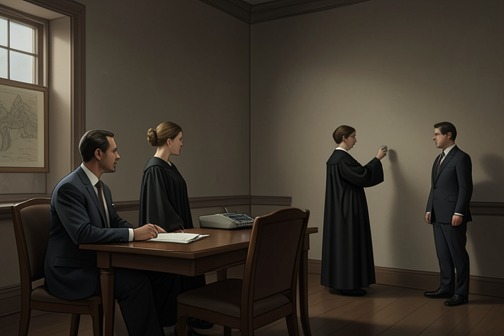
[Barbara Sabich](entity:character-recall-character-barbara-sabich-8e06df98492f)’s revelation about [Carolyn Polhemus](entity:character-recall-character-carolyn-polhemus-749a3ce67692)’s murder emerges in a conversation that also becomes a reckoning over [Rusty Sabich](entity:character-recall-character-rusty-sabich-45b128862904)’s affair, the trial, and the damage both spouses carry. [Barbara](entity:character-recall-character-barbara-d5f53d2adcbd) says she was prepared to tell the truth about what happened, and Rusty makes explicit that she was the person who killed Carolyn. But acknowledgment does not restore their marriage: Barbara describes herself as unable to feel safe, and leaves the conversation expecting to leave the home as well.
## Background and the approach to disclosure
Rusty begins speaking while still looking at the wall, breaking a silence he had expected to keep. He tells Barbara that he has spent a long time considering the reasons people kill, while admitting that no explanation can fully make such an act comprehensible. He apologizes for his relationship with Carolyn and acknowledges the intensity of his attachment to her. His account distinguishes explanation from excuse: he does not claim that obsession justifies what happened, but argues that the circumstances should be faced rather than left to unspoken speculation.
His reflections also turn to how imagined wrongdoing can become action. In his account, a person dwells on a carefully elaborated plan, finds the thought stimulating, takes an initial step while assuring himself that no real harm has been done, and then crosses a decisive threshold. The passage does not present this as a legal argument or a justification. It shows Rusty trying to describe how deliberate thought and self-deception can approach an irreversible act, even when the person thinking about it denies that anything has yet happened.
Rusty connects the disclosure to his wish to continue with Barbara and to limit the harm done to their family, including [Nathaniel Sabich](entity:character-recall-character-nathaniel-sabich-068f7f4924a2). He also says he does not want the murder to have had no decent consequence. His suggestion that part of the act may have been for the good of the marriage, and part for his own benefit or revenge, is his attempt to make sense of it, not a claim that the crime was justified. The effort to put everything openly between them is presented as a condition for deciding what their relationship can become.
## Barbara’s acknowledgment
Barbara answers that she is sorry and says she had been ready to tell the truth at any point, including if called as a witness. Rusty accepts that she means it, but explains why her testimony would not have helped him: the jury would have treated her account as a desperate effort to save him and would not have believed that she was the one who killed Carolyn. Her statement and his answer leave the central fact unmistakable. Barbara could have disclosed her own responsibility, but the trial reached its conclusion without that testimony.
The exchange changes the meaning of Barbara’s earlier silence. It is not presented as a revelation that makes the past simple or resolves every question about motive. Instead, her willingness to tell the truth sits beside Rusty’s recognition that the truth, spoken in court, might have been dismissed. The difference between private knowledge and what a courtroom could accept remains crucial: Barbara’s account could have been true and still have failed to persuade anyone. Rusty’s response registers not only what she knew but also how little power she believes she had to alter the case once it was under way.
## Guilt, fear, and separation
Barbara describes the aftermath in terms of a damaged sense of self and safety. She feels unable to get a hold on who she is, and says that ordinary life seems unstable. Watching Rusty during the trial made her understand how much she did not want him to suffer, but that recognition did not free her from the consequences of what she had done. She says she cannot become a normal person again while living with him, and cannot imagine a life in their home that consists of anything but remorse and fear. She struggles to name her feeling, finally identifying it as guilt while also insisting that no word captures it.
Rusty proposes that they might share the blame, but Barbara rejects that as the right account. She believes the trial ended as it should have, a judgment that acknowledges the outcome without transforming her guilt into absolution. Her words bring her to tears; after she regains some control, she begins to leave. She allows Rusty to hold her for a long moment, then breaks away and goes upstairs. Rusty expects her to lie on their bed, weep, and begin packing to leave. The anticipated departure makes clear that her admission has not restored the life they had before the murder or the trial.
## Significance of the conversation
The scene places disclosure and repair side by side, then refuses to treat them as the same thing. Rusty’s willingness to speak openly and Barbara’s acknowledgment establish a private truth between them, but neither can use that truth to undo the trial’s damage or recover a secure marriage. Her remorse is genuine in the conversation, yet it does not remove her fear of living with Rusty; his willingness to hold her does not persuade her to stay. The brief embrace offers contact without reconciliation.
As an event in the novel’s resolution, the conversation shifts the question from who was responsible to what responsibility can now make possible. Barbara’s words confirm the hidden fact of her role in Carolyn’s death, while her distress and decision to leave show the human cost that follows its exposure. Rusty seeks to give the crime some meaning for the family, but Barbara will not accept shared blame as a solution. The truth is finally spoken between them; it arrives too late to make their former marriage livable.
Event 23
Murder of Carolyn Polhemus
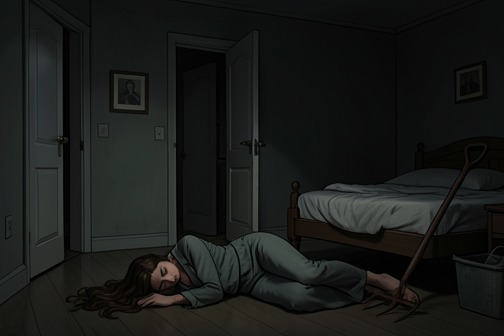
The murder of [Carolyn Polhemus](entity:character-recall-character-carolyn-polhemus-749a3ce67692) returns not as a settled case but as [Rusty Sabich](entity:character-recall-character-rusty-sabich-45b128862904)’s reconstruction of a crime that has shaped his life and remained officially unresolved. He identifies [Barbara Sabich](entity:character-recall-character-barbara-sabich-8e06df98492f) as the person who could have planned and carried it out, describing how she might have created an alibi and manipulated evidence. Yet the account does not lead to a prosecution or an authoritative public resolution. Its force lies in the collision between Rusty’s private understanding, his history with Carolyn, and the fact that he chooses not to expose what he believes.
## Background and Retrospective Recognition
The murder occurred on [April 1](entity:time-recall-time-april-1-518371dfb9fe), at [Carolyn Polhemus’s apartment](entity:location-recall-location-carolyn-polhemus-s-a-54b482d8bd36). The account returns to it through later recollection rather than through a contemporaneous scene: Rusty pieces together a possible sequence and sets it against details that had once seemed incidental. His explanation makes domestic objects and investigative traces newly consequential, but it remains his reconstruction, not a verdict delivered by a court.
A black iron garden tool, known as a [Whatchamacallit](entity:object-recall-object-whatchamacallit-e8c087cfdc1d), becomes the most tangible link between that past and Rusty’s present. It was among the equipment brought to the Sabich home after the death of [Barbara](entity:character-recall-character-barbara-d5f53d2adcbd)’s father, delivered by Barbara’s mother. The tool could serve several ordinary uses around a yard; Rusty later recognizes that it was also the instrument used in Carolyn’s murder. The contrast between its practical place in the household and its role in the crime makes the past persist in an object that had never been removed from ordinary life.
## Rusty’s Reconstruction of the Crime
Rusty’s account describes Barbara preparing before she went to Carolyn’s apartment. She stopped at the university and used its computer system, activity that could supply an alibi and occupy enough time to make that account plausible. In his reconstruction, Carolyn expected Barbara and let her into the apartment. Barbara had brought the garden tool and cord, and she left a glass at the bar as part of the scene she arranged afterward.
The planted biological evidence was another part of that design. Rusty attributes to Barbara the use of material she had collected and her attempt to make it appear connected to the crime. He emphasizes that the plan depended on what she thought investigators would examine and what she assumed would escape scrutiny. This is not presented as a confession from Barbara; it is Rusty’s detailed explanation of how he believes she constructed a misleading account of the killing.
The proposed sequence also includes Barbara unlocking the doors before leaving. In Rusty’s telling, that action helped shape how the apartment and the circumstances of entry would be understood. His reconstruction makes the crime appear less like an isolated act than a sequence of choices, each intended to direct attention away from its maker. He does not claim that Barbara foresaw every consequence: the later investigation uncovered details that, in his view, she had not anticipated.
## Evidence and the Household Object
Rusty connects Barbara to the investigation through several kinds of forensic evidence. Fibers from the carpet in her home were found on the hem of her skirt, and investigators recovered hairs that could have come from her. He also points to the detailed examination of the semen specimen, the tracing of a call through telephone records, and a third fingerprint on the glass. Each clue has its own limits, but together they form the pattern on which Rusty bases his account.
The significance of the Whatchamacallit is personal as well as evidentiary. After the trial, Rusty noticed dried blood and a blond hair on one of its teeth. He stared at the tool, then carried it to the basement and washed it in the laundry tub; Barbara came downstairs while he was doing so. The episode joins recognition to concealment: Rusty has encountered evidence that could expose the past, yet the act he describes is to clean the object rather than bring it to investigators. The tool’s inheritance through Barbara’s family makes the discovery especially close to home without establishing, by itself, who used it.
## Guilt, Silence, and the Unresolved Case
Rusty’s reflections widen beyond the mechanics of the crime. He considers how a person can entertain a plan, take an initial step, and gradually cross a boundary while telling himself that no real harm has yet been done. He apologizes to Barbara for his own part in their shared history, while acknowledging that the reasons behind killing are not fully comprehensible even to the person who acts. His language about having deliberately reached toward Carolyn underscores his own desire and responsibility; it does not, in itself, settle who killed her.
That distinction keeps the ending morally unsettled. Rusty’s reconstruction accuses Barbara, but his willingness to state it aloud is not the same as turning it into a public case. He tells her that he wants what each of them knows to be spoken between them and says he wants to go on, in part to limit the damage to their lives. The disclosure therefore functions both as an accusation and as an effort to establish the terms of their future, not as a formal appeal for justice.
The murder remains unsolved. Rusty says that no one is pursuing it with him, and that trying two people for one crime would be practically impossible. When a jailhouse claimant later tries to confess, Rusty sends Lipranzer to take the statement; Lipranzer reports that it is worthless. That episode offers no new resolution. The case ends where Rusty’s private knowledge and public silence meet: he has articulated a detailed account of Barbara’s actions, but the crime remains without an official finding.
Event 24
Prosecution of Rusty Sabich
The prosecution of [Rusty Sabich](entity:character-recall-character-rusty-sabich-45b128862904) makes a legal victory coexist with an unresolved murder: Rusty survives the case, but the truth he believes about [Barbara Sabich](entity:character-recall-character-barbara-sabich-8e06df98492f) never becomes part of his defense. In a late conversation with [Dan Lipranzer](entity:character-recall-character-dan-lipranzer-3c94be383cf0), the two men test competing explanations of the case. Rusty does not accuse [Barbara](entity:character-recall-character-barbara-d5f53d2adcbd) in court or tell his lawyers what he suspects. After the prosecution has ended, the murder of [Carolyn Polhemus](entity:character-recall-character-carolyn-polhemus-749a3ce67692) remains officially unsolved, and the private truth remains difficult to establish even between friends.
## Background and Stakes
The case had placed Rusty, a prosecutor familiar with the workings of the justice system, under suspicion for Carolyn’s murder. Lipranzer’s reconstruction is that Barbara wanted Carolyn dead and expected Rusty to be imprisoned for the crime. In his view, her plan depended on the case passing to investigators who knew Rusty well enough to see him as a plausible suspect. The irony, as Lipranzer sees it, is that Rusty’s responsibilities as chief deputy prosecutor led him to take over the investigation himself. Barbara could have anticipated an ordinary homicide investigator, Lipranzer argues, but not Rusty’s unexpected role in the case.
Lipranzer also connects the suspected plan to knowledge accumulated through years of intimacy and observation. He points to Barbara’s possible familiarity with Rusty’s habits and home, and to the chance that an investigator who knew him personally would regard their marriage and his connection to Carolyn as evidence against him. This is Lipranzer’s interpretation, not a proven account of Barbara’s plan. Rusty allows that it is possible and says Barbara had told him events did not go as she expected, but he cannot say what she meant by that.
## Lipranzer’s Reconstruction
The conversation turns on a tension between suspicion and friendship. Lipranzer had only recently suspected Rusty himself; now he argues that Barbara may have intended to make him the apparent killer. His account gives the prosecution’s outcome a bitter reversal: the person expected to investigate Rusty became the person prosecuted, while the person Lipranzer now suspects was never charged. The case’s personal stakes sharpen this reversal. Lipranzer had worked beside Rusty and knows details of his life that could make a planted or misread clue seem persuasive.
Rusty does not accept Lipranzer’s explanation as settled fact. He distinguishes between believing Barbara committed the murder and believing she regretted it. He continues to believe both, while acknowledging that her explanation of what went wrong did not clarify matters for him. The prosecution therefore leaves the two men with different kinds of uncertainty: Lipranzer offers a coherent theory of motive and intended framing, while Rusty holds to a private judgment about Barbara’s guilt and remorse that he cannot verify publicly.
## The Defense Rusty Refused
Rusty confirms that he did not tell either lawyer what he suspected. He had thought that [Sandy Stern](entity:character-recall-character-sandy-stern-40ea4b75c8ab) might have discerned the truth, especially when Stern considered calling Barbara as a witness, but Rusty felt that Stern did not genuinely intend to put her on the stand. [Jamie Kemp](entity:character-recall-character-jamie-kemp-f80ca6ce7734), too, had noticed that something was wrong with the telephone records. Neither inference became an accusation from Rusty.
His silence was bound to his family as well as to his legal strategy. He would not force his lawyers to choose between him and Barbara, and he could not accept a defense that required taking his son away from his mother. He also believed that accusing Barbara could make the case against him more persuasive. In Rusty’s imagined version of [Nico Delia Guardia](entity:character-recall-character-nico-delia-guardia-30522ffb2b62)’s argument, the prosecution could portray him as a prosecutor who understood how to stage a crime, a husband in an unhappy marriage, and a man whose attachment to his son gave him a reason to frame his wife as a fallback suspect. Rusty feared that jurors might believe such a theory even though he insists it was false.
## Outcome and Aftermath
The exchange does not produce a confession, a new prosecution, or a publicly established solution. Rusty says he believes Barbara killed Carolyn and was sorry, but he also believes that telling the lawyers would not have helped him. His decision leaves a divide between what he privately accepts and what could have been argued in court. Dan Lipranzer answers that Rusty did not kill Carolyn; Rusty confirms this, although Lipranzer remains unsettled by the gap between assertion and proof.
In the aftermath, Rusty reports that Carolyn’s murder remains unsolved. No one is pursuing it with him, and he regards a second prosecution for the same crime as practically impossible. When a jailhouse prisoner later tries to confess, Rusty sends Lipranzer to take the statement; Lipranzer quickly judges it worthless. The attempted confession changes nothing about the case’s status. Rusty remains in [Kindle County](entity:location-recall-location-kindle-county-bdf0d318a2ad) as a caretaker prosecutor, publicly marked by the prosecution and by the belief that he was set up, while the identity he privately assigns to Carolyn’s killer remains outside any official resolution.
## Narrative Significance
The prosecution’s ending separates legal outcome from knowledge. Rusty’s refusal to accuse Barbara protects his son and avoids making his own defense depend on a claim he thinks could be turned against him. At the same time, that choice prevents his private account from being tested in court. Lipranzer’s theory gives the reader a possible explanation, not confirmation; Rusty’s certainty that Barbara was responsible likewise remains a personal belief rather than an adjudicated finding.
The final conversation also puts trust under pressure. Lipranzer moves from suspecting his longtime friend to defending him, but Rusty recognizes that belief does not erase the possibility of doubt. The murder remains unsolved not because the characters lack theories, but because their knowledge, loyalties, and willingness to speak do not converge into evidence that can settle the case. The prosecution ends, while the distinction between being cleared and knowing what happened persists.
Event 25
Delia Guardia recall election
The [Delia Guardia recall election](entity:event-recall-event-delia-guardia-recall-el-7c49eb4b4d8b) reverses the political succession that had displaced [Raymond Horgan](entity:character-recall-character-raymond-horgan-94b7cd2876a4): [Nico Delia Guardia](entity:character-recall-character-nico-delia-guardia-30522ffb2b62) nearly retained the prosecuting attorney’s office, but was recalled by about 2,000 votes. Its aftermath reaches beyond Nico’s removal. The contest draws former rivals into opposition to him, ends [Tommy Molto](entity:character-recall-character-tommy-molto-196f33857fc7)’s tenure on the staff, and sets in motion the process that brings [Rusty Sabich](entity:character-recall-character-rusty-sabich-45b128862904) back to the office as its acting head.
## Political Background
The recall follows a change in power that began with the contest between Raymond Horgan and Nico Delia Guardia. Horgan had led the office for more than a decade and remained widely expected to win the party primary; in [Kindle County](entity:location-recall-location-kindle-county-bdf0d318a2ad)’s one-party political order, victory there was tantamount to election. Yet his campaign faced factional opposition and a weakening position. By [Election Day](entity:time-recall-time-election-day-4bfca208366c), party support belonged to Nico, while Horgan’s allies were still hoping that favorable weather and a late recovery in momentum might close the gap.
The office’s political environment was bound up with party organization and personal loyalties. Under an arrangement Raymond had made with [Bolcarro](entity:character-recall-character-bolcarro-750a2086f02d), many staff members were given Election Day off to perform party work, even though Raymond had discouraged his employees from campaigning for him. That uneasy division between the prosecuting office and the party machine forms part of the setting in which Nico’s later recall campaign unfolds. The book presents his removal not as an escape from local political pressures, but as a change in who holds office within a system still shaped by those pressures.
## Petition and Campaign
In January, a petition drive prompted the [City Council](entity:organization-recall-organization-city-council-6e73bc9e1b7b) to authorize a recall election. Bolcarro could have prevented the election, but instead maintained what the narration describes as marked neutrality toward Nico. The account does not identify the petition’s organizers or specify what prompted the drive; it establishes the institutional decision that made a recall vote possible and Bolcarro’s choice not to block it.
Nico campaigned actively to keep his position and nearly succeeded. His effort makes the outcome a close political reversal rather than a foregone conclusion. The recall therefore differs from a routine transfer of office: Nico retained enough support to come close to surviving, even as prominent figures who had stood within Raymond’s political circle came out against him.
## Opposition and Result
With about two weeks remaining in the campaign, Nico fired Tommy Molto. The account places the dismissal late in the contest but does not state that it caused the recall result. Raymond, [Larren Lyttle](entity:character-recall-character-larren-lyttle-d884c770eae6), and [Edgar Mumphrey](entity:character-recall-character-edgar-mumphrey-926b068539d2) were among the civic leaders who publicly opposed Nico. Their intervention gave the campaign a striking alignment: Raymond, whose own defeat had cleared the way for Nico’s administration, joined figures associated with his political world in resisting Nico’s effort to remain in office.
Nico was recalled by a margin of about 2,000 votes. The narrowness of the result underscores how uncertain the contest had been; the decisive fact is not that he failed to campaign, but that active campaigning and near success did not preserve his post. His removal ended his tenure as prosecuting attorney, though not his political ambitions. He planned to run for City Council from the South End, and Rusty expected him to win.
## Aftermath and Significance
After the recall, Bolcarro formed a citizens’ commission to recommend a new prosecuting attorney, and Raymond served on it. That process led Raymond to approach Rusty about the job. [Mac](entity:character-recall-character-mac-416206506779) had reportedly been the first choice, but declined to leave the bench. Rusty accepted, and on March 28—four days short of the anniversary of [Carolyn Polhemus](entity:character-recall-character-carolyn-polhemus-749a3ce67692)’s murder—became acting Kindle County prosecuting attorney. He agreed not to run for re-election, and the press described him as the caretaker prosecutor.
The recall thus clears a path to an appointment without restoring the political world that preceded Nico. Rusty takes office amid strained relationships and a public reputation shaped by the murder case and its aftermath. Nico, meanwhile, remains a prospective political force rather than disappearing from the story. The election’s consequence is therefore both immediate and provisional: one officeholder is removed, but the county’s contests for influence continue.
Event 26
Rusty Sabich's appointment as acting prosecuting attorney
[Rusty Sabich](entity:character-recall-character-rusty-sabich-45b128862904)’s appointment as acting prosecuting attorney returns him to the office at the center of the case that left him publicly stigmatized. The appointment offers a route back into public service, but not a clean restoration: [Carolyn Polhemus](entity:character-recall-character-carolyn-polhemus-749a3ce67692)’s murder remains unsolved, and Rusty expects to keep living with the suspicions attached to his name.
## Background and Selection
In January, a petition drive led the [City Council](entity:organization-recall-organization-city-council-6e73bc9e1b7b) to authorize a recall election against [Nico Delia Guardia](entity:character-recall-character-nico-delia-guardia-30522ffb2b62). [Augustine Bolcarro](entity:character-recall-character-augustine-bolcarro-24fcc85c8230) could have prevented the election but remained notably neutral toward Nico. Although Nico campaigned hard to keep his position and came close to winning, [Tommy Molto](entity:character-recall-character-tommy-molto-196f33857fc7) was fired with about two weeks left in the campaign. [Raymond Horgan](entity:character-recall-character-raymond-horgan-94b7cd2876a4), [Larren Lyttle](entity:character-recall-character-larren-lyttle-d884c770eae6), [Edgar Mumphrey](entity:character-recall-character-edgar-mumphrey-926b068539d2), and other civic leaders opposed Nico, who was recalled by roughly 2,000 votes. He planned to seek a City Council seat from the South End, where Rusty expected him to win.
After the recall, [Bolcarro](entity:character-recall-character-bolcarro-750a2086f02d) formed a citizens’ commission to recommend a new prosecuting attorney. Raymond served on the commission and contacted Rusty about the post. [Mac](entity:character-recall-character-mac-416206506779) was rumored to be the first choice but declined to leave the bench. Raymond assured Rusty that the relevant parties had been consulted and that he would receive broad support. Rusty initially regarded the prospect as absurd and doubted that an appointment could rehabilitate him, but eventually agreed to consider it if the arrangements could be made.
## Appointment and Terms
On March 28, four days short of the anniversary of Carolyn’s murder, Rusty became acting [Kindle County](entity:location-recall-location-kindle-county-bdf0d318a2ad) prosecuting attorney. He accepted with the understanding that he would not run for reelection. The appointment therefore placed him in charge of the office without making him a candidate for a full elected term. The mayor told him more than once that he thought Rusty might make a good judge, but made no formal offer.
## Aftermath and Significance
Rusty said he enjoyed the work, even though his relationships with many people remained strained. He chose to stay in Kindle County rather than start a new life elsewhere, reasoning that moving would not necessarily make his difficulties easier. The press described him as a caretaker prosecuting attorney, and he anticipated remaining a kind of public relic: people could continue to regard him as framed and to blame Nico for protecting Molto, while still seeing the whole affair as discreditable. His return to office thus marks professional reentry without erasing the case’s consequences.
The unresolved murder places a limit on what the appointment can settle. No one was pursuing Carolyn’s case, and Rusty considered another prosecution for the same crime practically impossible. When a few months earlier a jailhouse inmate had tried to confess, Rusty sent [Dan Lipranzer](entity:character-recall-character-dan-lipranzer-3c94be383cf0) to take his statement; Lipranzer reported back that the claim was not credible. The office changed hands, but the central question of Carolyn’s death remained open.